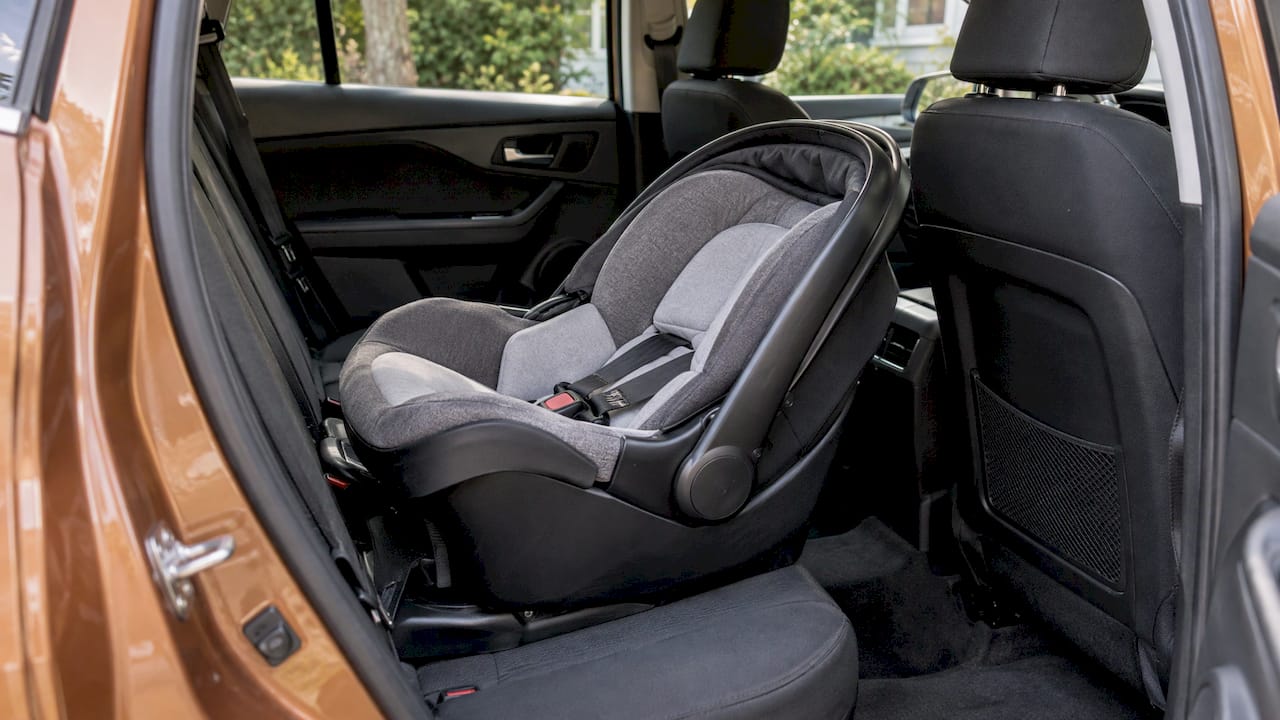
There is no single “turn-around birthday” in the U.S. The AAP and the CDC both say to keep your child rear-facing as long as possible, until they reach the top height or weight limit of their car seat. For most kids, that means well past age 2. If you have been lying awake wondering whether your toddler is ready to face forward, you are not alone, and the answer is simpler than the 3am Google rabbit hole makes it seem.
This guide walks you through what the major health and safety bodies recommend, how to read your own car seat’s limits, and how state laws fit in.
TL;DR
- Babies should ride rear-facing from their very first ride home, and stay that way until they reach the highest height or weight limit of their seat.
- The AAP no longer names a specific age for turning forward-facing. The old 2-year marker was dropped in 2018 in favor of seat limits.
- State laws differ by age, weight and height, so your state’s law is the minimum, not the goal.
- Your car seat manual and the labels on the seat tell you your child’s real limits.
- Children under 13 are safest in the back seat.
Table of Contents
- What is the rear-facing age in the U.S.?
- Your car seat’s limits are the real deadline
- What if my baby outgrows the infant seat?
- Is rear-facing past age 2 okay?
- How U.S. state laws fit in
- A simple rear-facing checklist for parents
- Planning ahead as a first-time parent
- Perspective
- Keep it all in one place
- FAQ
- Final thoughts
- Sources
What is the rear-facing age in the U.S.?
The short answer: birth until your child outgrows the rear-facing limits of their seat. The CDC says children should ride rear-facing from birth until they reach the seat’s maximum height or weight limit, and it advises keeping them that way as long as possible.
The AAP says the same thing. Its parent-facing guidance recommends that all infants ride rear-facing starting with the first ride home from the hospital, and that infants and toddlers stay rear-facing until they reach the highest weight or height their seat manufacturer allows. The same page notes that most convertible seats have limits that let children ride rear-facing for 2 years or more.
So if you searched for an age, here is the honest version: age 2 is a common floor in many conversations, but it is not the finish line.

Why you may still hear “age 2”
For years, the AAP advised rear-facing until at least age 2. In 2018 the organization removed that specific age and shifted the focus to the height and weight limits set by manufacturers. That is why you will see older articles, grandparents and even some state laws still talking about 2 years.
The Governors Highway Safety Association supports the AAP’s recommendations, including rear-facing restraints until at least age 2, then forward-facing, then booster seats, each used as long as possible.
Your car seat’s limits are the real deadline
NHTSA explains that height and weight limits are what decide when a child moves up. A child should change to the next stage only after reaching the top height or weight limit allowed by the manufacturer of their specific seat. Recommended age ranges vary because children grow at different rates and seats have different limits.

That means two toddlers of the same age can be at very different points. One may be done with a small infant seat at 9 months. Another may fit a convertible seat rear-facing for years.
How to find your seat’s limits
- Look for the labels on the side or back of the seat. They list the rear-facing weight and height range.
- Open the manual. It also explains where your child’s head should sit in relation to the top of the shell.
- Write the numbers down. Add them to your phone notes or your planner so you can check them at each checkup.
- Re-check every few months. Babies and toddlers grow fast, and so do their legs and torsos at different speeds.
NHTSA’s guidance for parents of a 2-year-old who still fits says to keep the child rear-facing as long as possible and to verify the height and weight limits in the seat’s manual.
A quick reference by stage
| Stage | Seat type | What to watch |
|---|---|---|
| Newborn to outgrowing the infant seat | Rear-facing infant-only seat, or convertible/all-in-one used rear-facing | Seat’s rear-facing weight and height limits |
| Outgrown the infant seat, still within limits of another seat | Convertible or all-in-one seat, rear-facing | Keep rear-facing until the top limit of that seat |
| Reached the top rear-facing limit | Forward-facing seat with a harness | Harness and forward-facing limits in the manual |
| Outgrown the harness | Booster seat | Follows your seat and state guidance |
The general sequence of rear-facing, then forward-facing with a harness, then booster follows CDC guidance on child passenger safety.
What if my baby outgrows the infant seat?
This is one of the most common moments of panic for new parents. Your baby is still small, but the infant carrier is maxed out.
NHTSA says that if a child under age 1 outgrows an infant-only seat, a convertible or all-in-one seat used rear-facing is the recommended next step. You do not need to flip your baby around. You need a seat with higher rear-facing limits.
A few practical notes:
- Outgrowing an infant seat usually means reaching its height or weight limit. It does not mean your baby is “too big” to ride rear-facing.
- Check whether the convertible seat you are considering lists a rear-facing range that fits a baby of your child’s current size.
- Plan the swap ahead of time, not the week of a long trip.
This is a good thing to put on your pre-baby registry list too. Many parents buy an infant seat first and a convertible seat later, and having both on a checklist helps you budget.
Is rear-facing past age 2 okay?
Yes. It is exactly what the AAP and CDC recommend when your child still fits within the seat’s limits. The AAP’s message is to keep children rear-facing as long as possible, up to the seat’s limits, rather than moving them at a set birthday.
Common worries we hear from parents:
- “Their legs look cramped.” Toddlers often sit with their legs bent or crossed, and that is a common sight in a rear-facing seat. Your child’s comfort matters, but the limits on the seat label are what decide when to switch.
- “They are getting bored or fussy.” Try a soft toy attached safely, a car-safe mirror recommended in your seat manual, or songs and snacks timed for the drive. Never add products to the seat that the manufacturer does not approve.
- “Other kids in our playgroup turned around already.” Different seats and different states can lead to different choices. Your seat’s limits are your guide.
How U.S. state laws fit in
Every state and territory has child passenger safety laws, and requirements vary based on age, weight and height. Some states require children to ride rear-facing until a certain age, such as 2. Others set lower minimums or use weight or height cut-offs.
Think of the law as the legal minimum and the AAP and CDC guidance as the safety goal. GHSA itself supports closing gaps in state laws so that every child is covered in every seating position in every vehicle.
What to do with that:
- Look up your state’s current child restraint law on your state highway safety office or DMV site. Laws change, so check the official page.
- Follow the stricter of two things: your state law or your seat’s manual.
- If you travel or move, check the law in the new state before you go.
Where should the car seat go in the vehicle?
The CDC advises that children younger than 13 should ride in the back seat for the best protection. That is especially important to remember with rear-facing seats, which should never be placed in front of an active airbag.
A simple rear-facing checklist for parents
Use this list at each stage, and again whenever you buy or install a new seat:
- Seat is rear-facing for your baby’s very first ride home
- Seat is installed in the back seat
- Rear-facing height and weight limits are written down
- Installation follows both the seat manual and the vehicle manual
- Harness fits snugly, as described in the manual
- You re-check your child’s height and weight at every pediatric visit
- You know your state’s law and your plan for the next seat
If you are not confident about your installation, a certified child passenger safety technician can check it with you. Many local fire departments, hospitals and health departments offer car seat checks. Call ahead to see what is available near you.
Planning ahead as a first-time parent
Car seat decisions come at the same time as everything else: the hospital bag, the nursery, the pediatrician list and a hundred small tasks. It helps to see where the seat fits in the bigger picture.
- Before baby arrives, practice installing the infant seat in your own car. Our small nursery setup guide covers other safety steps for home.
- In the early months, tummy time and position changes matter because babies spend a lot of time in carriers and seats. Knowing how to balance seat time with floor time is part of that.
- As your baby grows, developmental milestones such as sitting and rolling can change how they look in the seat, but they do not change when to turn forward-facing. The seat’s limits do.
Perspective
Parents tell us the hardest part is not the rules. It is the conflicting advice. One friend says turn them at 1, another says 2, and a relative says it was fine in their day.
We built our planner around a simple idea: put the guidance in one place, checked against sources like ACOG, the AAP and the NHS, and give you room to write down what is true for your family. For car seats, that means a page where you note your seat’s model, its rear-facing height and weight limits, your child’s latest measurements and your state’s rule.
A written log works at the 2am feeding and at the checkup, and it does not depend on a battery or a signal. We think a calm, organized parent makes better safety decisions, and that is what we want for you.
Rebeka
Keep it all in one place
Car seat limits, checkup measurements, milestones, feeding and sleep notes pile up fast. Our Pregnancy and Early Parenthood Planner is designed to hold them together, from pregnancy through toddlerhood, so you are not hunting through screenshots and old texts. It is available as a Physical Planner for $120 or a Digital Edition for $25, both one-time purchases.

If you like to write things down by hand, the physical planner gives you a permanent, offline record. If you prefer your phone or tablet, the digital edition covers the same ground.
FAQ
How long does a child have to be rear-facing?
A child should stay rear-facing until they reach the top rear-facing height or weight limit of their car seat. The AAP and CDC both advise keeping children rear-facing as long as possible. Your state law sets a minimum, which may be lower than what the AAP recommends.
Does the AAP say to turn a child forward-facing at age 2?
No. The AAP removed the specific 2-year age criterion in 2018 and now points parents to the manufacturer’s height and weight limits. Many children can ride rear-facing for 2 years or more in a convertible seat.
Can my baby switch to a convertible seat before they outgrow the infant seat?
Yes, as long as the convertible seat is used rear-facing and your child fits its limits. NHTSA recommends a convertible or all-in-one seat in the rear-facing position when a child under age 1 outgrows an infant-only seat. Read the manual for the minimum weight a convertible seat allows.
Do all states require rear-facing until age 2?
No. Every state has child passenger safety laws, but they vary based on age, weight and height. Check your state’s official page for the current rule, and follow the stricter of your state law or your seat’s limits.
Where is the safest place for a car seat in the car?
The CDC says children younger than 13 should ride in the back seat. Install the seat following both your car seat manual and your vehicle manual.
Final thoughts
Rear-facing is simple once you know where to look: your seat’s label, your seat’s manual and your pediatrician’s guidance. Keep your child rear-facing as long as the seat allows, check your state’s rules, and write down your numbers so you are not guessing later. When you are ready to keep all of this organized, you can explore the planner at babybareessentials.com.
Sources
- Child Passenger Safety | CDC
- Rear-Facing Car Seats for Infants & Toddlers | HealthyChildren.org (AAP)
- New child passenger safety seat guidance | AAP News
- GHSA Policy on Occupant Protection
- Car Seat & Booster Seat Safety | NHTSA
- How to Install Rear-Facing Car Seats | NHTSA
- Child Passengers | Governors Highway Safety Association
Leave a Reply