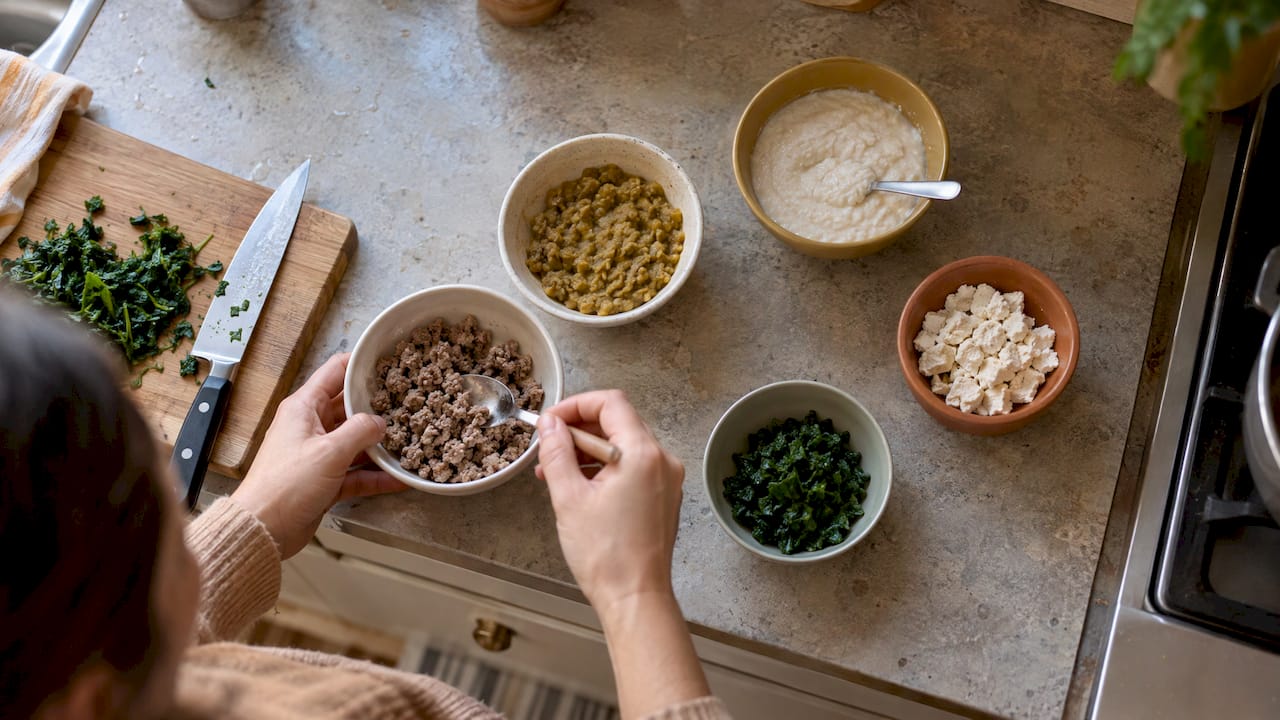
The best iron-rich foods for babies starting solids are meat, poultry, fish and eggs, plus iron-fortified infant cereal, beans, lentils, tofu and dark leafy greens. Offer them from about 6 months, when your baby is ready for solid food. Serve them in a texture your baby can handle. Pair plant sources with vitamin C. Here is how to do that without the 3am Google rabbit hole.
TL;DR
- Babies need more iron from food starting around 6 months. The CDC says to offer iron-containing foods when you start solids.
- The daily target for babies 7 to 12 months is 11 mg of iron.
- Meat, poultry, fish, eggs and iron-fortified infant cereal are the easiest everyday choices. Beans, lentils, tofu and greens count too.
- Pair plant-based iron with vitamin C foods such as berries, tomatoes or citrus to help absorption.
- Start smooth or very soft, cut food to a safe size, and stay with your baby while they eat.
Table of Contents
- Why iron matters at 6 months
- How much iron does a 6-month-old need?
- The best iron-rich foods for babies
- Is salmon a good source of iron for babies?
- Boost absorption with vitamin C
- What about ragi, drinks and other questions parents ask?
- How to serve iron-rich foods safely
- A sample day of iron-rich eating at 6 to 8 months
- Perspective: why we keep iron on the checklist
- Make it easier with a planner
- Beyond the first year
- FAQ
- Your next step
- Sources
Why iron matters at 6 months
If you are feeling a little pressure about this, you are in good company. Iron is one of the nutrients parents hear about most when solids begin, and it is easy to see why. Around the middle of the first year, a baby’s need for iron rises, and food has to start doing part of the job.
The CDC explains that standard iron-fortified formula supplies iron during the first 12 months. Breastfed babies should get iron-rich complementary foods after about 6 months. The USDA’s evidence review and the Dietary Guidelines reach a similar conclusion. They find that iron-rich foods, especially meat or iron-fortified cereal, help maintain iron status during the first year. The benefit is most evident for breastfed babies or babies with low iron stores. It is less evident when a baby gets enough iron-fortified formula.
So the goal is not perfection at every meal. It is a steady habit: one or two iron-rich foods in most days, starting with your baby’s first bites.
Some babies may need iron earlier than 6 months, but only on a clinician’s advice. If you are breastfeeding and wondering about supplements, ask your pediatrician at your next visit.

How much iron does a 6-month-old need?
The official number applies to the 7 to 12 month window. The NIH Office of Dietary Supplements lists the Recommended Dietary Allowance at 11 mg per day for babies 7 to 12 months old. For a baby who just turned 6 months, think of that as the direction you are heading in, not a number to hit on day one.
You do not need to count milligrams at every meal. In the early weeks, your baby may eat only a few spoonfuls. Breast milk or formula is still the main source of nutrition. What matters is that the foods you do offer include iron, rather than only fruits and vegetables with little iron.
A few practical ways to think about it:
- Offer an iron-rich food at least once a day to begin with, and work toward two as your baby eats more.
- Rotate the sources. Variety protects you if your baby rejects one food this week.
- Watch the whole day, not one meal. A skipped lunch is not a problem if dinner includes beans or meat.
If you want a meal-by-meal view of how much to offer and when, our guide to starting solids at 6 months covers readiness, amounts and a simple schedule.
The best iron-rich foods for babies
The CDC lists two groups. Heme iron comes from animal foods. Non-heme iron comes from plants and fortified products, and it is less easily absorbed than heme iron. That does not make plant sources a poor choice. It just means a little pairing strategy helps, which we cover below.
Heme iron: meat, poultry, fish and eggs
The CDC names red meat such as beef, pork, lamb and venison, poultry, fatty fish and eggs among the iron-rich foods suitable for babies starting solids. A peer-reviewed review adds that protein foods including meat, poultry, eggs, seafood, nuts, seeds and soy also provide zinc, protein, choline and long-chain fatty acids.
Easy ways to serve them at 6 months:
- Beef or lamb: slow-cook until very tender, then puree with a little water or breast milk or formula, or shred finely.
- Chicken or turkey: dark meat is moister and easier to puree. Blend with a vegetable.
- Eggs: scramble until fully cooked and soft, or mash a hard-cooked egg into a smooth mix.
- Fish: flake carefully and check for bones every time.
Meat is often the food parents skip because it seems hard. Pureeing it with a familiar vegetable, or cooking a roast until it falls apart, makes it manageable.
Non-heme iron: fortified cereal, beans, lentils, tofu and greens
The CDC says iron-fortified infant cereal, beans, lentils, tofu and dark green leafy vegetables are non-heme iron sources. Infant cereal matters in real life. A study of U.S. infants found it was the top dietary source of iron for babies aged 6 to 11.9 months in the research summarized there.
The same review cautions that iron-fortified rice cereal should not be the only cereal offered. Mix it up with oat or multigrain infant cereal, and use cereal as one tool rather than the whole plan.
Ideas that work:
- Infant cereal: mix with breast milk, formula or water to a thin, smooth texture, then thicken over time. Check the label for added iron.
- Lentils: cook until very soft and puree or mash. Red lentils break down quickly.
- Beans: mash well, or blend into a smooth spread. Do not serve whole beans in a form your baby could choke on.
- Tofu: soft tofu mashes easily and can be cut into soft, finger-sized strips later on.
- Dark leafy greens: cook spinach until soft and blend into other foods.
A quick comparison table
The table groups common choices by type and shows an easy first way to serve them. It does not list amounts per serving, because those vary by product and brand. Check the nutrition label on fortified items.
| Food | Iron type | Easy first way to serve | Pair with vitamin C? |
|---|---|---|---|
| Beef, lamb, pork | Heme | Slow-cooked, pureed or finely shredded | Not required |
| Chicken, turkey (dark meat) | Heme | Pureed with vegetables | Not required |
| Eggs | Heme | Fully cooked, mashed or soft scrambled | Optional |
| Fatty fish (low-mercury) | Heme | Flaked, bones removed | Optional |
| Iron-fortified infant cereal | Non-heme | Thin and smooth, thicken over time | Yes, fruit puree |
| Lentils | Non-heme | Cooked soft, pureed or mashed | Yes, tomato or berries |
| Beans | Non-heme | Mashed smooth | Yes, sweet potato or citrus |
| Tofu | Non-heme | Mashed or soft strips | Yes, with fruit |
| Dark leafy greens | Non-heme | Cooked and blended | Yes, built in with other produce |
Is salmon a good source of iron for babies?
Salmon is a good food for babies, but it is not an iron powerhouse. The American Academy of Pediatrics reference table lists 0.8 mg of iron in a 3-ounce portion of cooked pink salmon. The same table lists higher amounts for some meats and for iron-fortified cereals.
That does not mean you should skip it. The FDA places salmon among its lower-mercury “Best Choices” and notes that fish provides iron and other nutrients that support brain development and immune systems in children. Serve salmon for its fats and protein, and lean on meat, lentils or fortified cereal as your daily iron anchors.
Remove every bone and the skin, flake it well, and check again before it reaches the tray. Fish is also a common allergen, so introduce it the way you would any other allergenic food.

Boost absorption with vitamin C
This is the easiest upgrade you can make. The CDC says vitamin C helps babies absorb non-heme iron, and suggests pairing plant sources with foods such as citrus fruits, berries, tomatoes, broccoli, cabbage, papaya or sweet potatoes.
Simple pairings:
- Lentil puree with a spoonful of tomato
- Infant oat cereal stirred with mashed strawberries or papaya
- Mashed beans with sweet potato
- Tofu strips with a side of soft-cooked broccoli florets
You do not need to measure anything. Just put a vitamin C food on the same tray as the plant-based iron food.
What about ragi, drinks and other questions parents ask?
Ragi and other grains
Ragi (finger millet) is a traditional first grain in many families. If it is part of your household’s food traditions, it can sit alongside other grains in your baby’s rotation. We would not rely on it as the only iron plan, though. The foods with the clearest support from U.S. health agencies are iron-fortified infant cereal, meat, beans, lentils and tofu. Keep those in the mix, and ask your pediatrician if you have questions about a specific grain or home-made flour.
Drinks
Babies under 12 months do not need iron-rich drinks. Their iron comes from breast milk or iron-fortified formula plus solid foods. Two things to know:
- Cow’s milk is not for the bottle before 12 months. Seattle Children’s notes it raises the risk of iron deficiency anemia in babies.
- Keep extra water small. The same page, citing the AAP, advises no more than 4 ounces of extra water a day for babies 6 to 12 months old, with a little more allowed on hot days.
If you use formula, choose one with iron. Formula already contains it, and the AAP concluded that formula with 12 mg of elemental iron per liter is safe for its intended use.
How to serve iron-rich foods safely
Iron-rich foods are often the ones that need more care: meat can be tough, beans can be firm, and fish can have bones. The CDC’s guidance for introducing solids is clear and practical:
- Start smooth. Offer mashed, pureed or strained foods first, then move to thicker and lumpier textures as your baby’s eating skills develop.
- Cook until soft. Food should be soft enough to mash with a fork.
- Prep meat and fish. Remove fat, skin and bones before cooking.
- Size matters. Cut small, round foods into small pieces.
- Stay close. Always watch your baby while they eat.
Also learn what to do if your baby chokes before you need it. Our guides on infant choking first aid and back blows and chest thrusts walk through the steps. When you are ready for more texture, safe finger food ideas by age can help. For the general method, see how to introduce solid foods safely.
Allergens and iron-rich foods
Several iron-rich foods are also common allergens, including eggs, shellfish and nut butters. The CDC advises you to introduce potentially allergenic foods when you introduce other foods, rather than delaying them. Nut butters should be thinned, never served as a spoonful or a thick glob. If your baby has severe eczema or a known allergy, talk to your pediatrician before you start. Our post on introducing new foods and allergies safely walks through a calm approach.
A sample day of iron-rich eating at 6 to 8 months
This is an example, not a rule. Breast milk or formula continues in between. Adjust to your baby’s appetite.
| Meal | Iron-rich option | Vitamin C pairing |
|---|---|---|
| Breakfast | Iron-fortified oat infant cereal, thin and smooth | Mashed strawberries or papaya |
| Lunch | Red lentil puree | Tomato, cooked soft |
| Snack (optional) | Mashed soft tofu | Pear or mango |
| Dinner | Slow-cooked beef or dark-meat chicken, pureed | Sweet potato or broccoli |
The USDA’s infant meal pattern for child care programs shows what a 6 to 11 month serving can look like. For that age it permits iron-fortified infant cereal or up to 4 tablespoons of meat, fish, poultry, whole egg, cooked dry beans, peas or lentils, plus vegetables or fruit as developmentally appropriate. That is a helpful picture of a small, realistic portion for a baby.
Perspective: why we keep iron on the checklist
We hear the same worry again and again from first-time moms: “Am I doing solids right?” Iron is often at the center of that worry, because the advice online can feel scattered and contradictory.
Our approach is simple. We build the plan from guidance reviewed against ACOG, NHS and AAP sources, then turn it into something you can use at the highchair. That means a short list of iron foods, a habit of pairing them with vitamin C, and a log you can fill in so you can see what your baby actually ate this week.
This is why we designed our planner as a physical, offline resource. When you are tired, a printed food log and checklist on the counter beats searching for the same answer again. It also gives you something concrete to bring to your baby’s checkups, so your pediatrician can see patterns rather than relying on memory.
The AAP recommends universal anemia screening at about 1 year of age. A written record of what your baby ate gives you a better conversation at that visit.
Rebeka
Make it easier with a planner
If you would like the sleep, feeding and solids pieces in one place, our Baby Bare Essentials Pregnancy Planner includes solid foods and recipes, feeding guides and development milestones from pregnancy through toddlerhood. The Physical Planner is $120, and the Digital Edition is $25, both one-off prices. You can see both options on the Baby Bare Essentials site, or read more about what is inside the planner.

It is a calm place to track which iron foods you have tried and how your baby responded. Our solid food introduction checklist is a good free starting point. If you are still deciding whether your baby is ready, the three readiness signs are worth a look first.
Beyond the first year
Iron needs continue into toddlerhood, and the foods you establish now will carry over. As your baby grows, the same list stays useful: meat, eggs, beans, lentils, fortified cereals and greens, paired with fruit and vegetables. Our overview of how toddler nutrition needs differ from other ages is a good next step.
At around 12 months, the AAP recommends anemia screening. Its risk factors include exclusive breastfeeding beyond 4 months without supplemental iron, and weaning to foods without iron-fortified cereals or naturally iron-rich foods. If any of that sounds like your situation, tell your pediatrician early rather than waiting for the checkup.
FAQ
How much iron does a 6-month-old need?
The official daily figure is 11 mg for babies 7 to 12 months old, according to the NIH. At 6 months, you are building toward that number with breast milk or formula plus a few spoonfuls of iron-rich solid foods. Offer one iron-rich food daily at first, then work toward two or more.
What is the best first iron-rich food for a baby?
There is no single best one. Iron-fortified infant cereal and pureed meat are the most common starting points, and both are supported by CDC guidance. Beans, lentils, tofu and eggs are good alternatives, especially for vegetarian families. Rotate them so your baby gets a range of flavors and textures.
Can babies get enough iron from plants alone?
Plants can contribute iron, but non-heme iron is less easily absorbed than heme iron, according to the CDC. Pair fortified cereal, beans, lentils, tofu and greens with vitamin C foods to help absorption. If your family eats a vegetarian or vegan diet, ask your pediatrician or a registered dietitian about your baby’s iron plan.
Is salmon a good iron source for babies?
Salmon provides some iron, but not as much as meat or fortified cereal. The AAP table lists 0.8 mg in 3 ounces of cooked pink salmon. It is still a good food for babies, and the FDA lists it among its lower-mercury choices. Remove all bones and skin before serving.
Do babies need iron drinks or juice?
No. Under 12 months, breast milk or iron-fortified formula provides your baby’s milk-based iron. Keep extra water to small amounts, and do not offer cow’s milk as a drink before 12 months. If you are worried about your baby’s iron, ask your pediatrician rather than adding drinks.
Your next step
Pick one iron-rich food this week and pair it with a fruit or vegetable. Write down how it went. Small, steady steps beat a perfect plan. When you want everything in one place, explore the planner at babybareessentials.com.
Sources
- Iron | Infant and Toddler Nutrition, CDC
- When, What, and How to Introduce Solid Foods, CDC
- Iron fact sheet for consumers, NIH Office of Dietary Supplements
- Diagnosis and Prevention of Iron Deficiency and Iron-Deficiency Anemia in Infants and Young Children, AAP
- Iron-Rich Complementary Foods: Imperative for All Infants
- Advice about Eating Fish, FDA
- CACFP Infant Meal Pattern, USDA
- Bottle-Feeding (Formula) Questions, Seattle Children’s
Leave a Reply