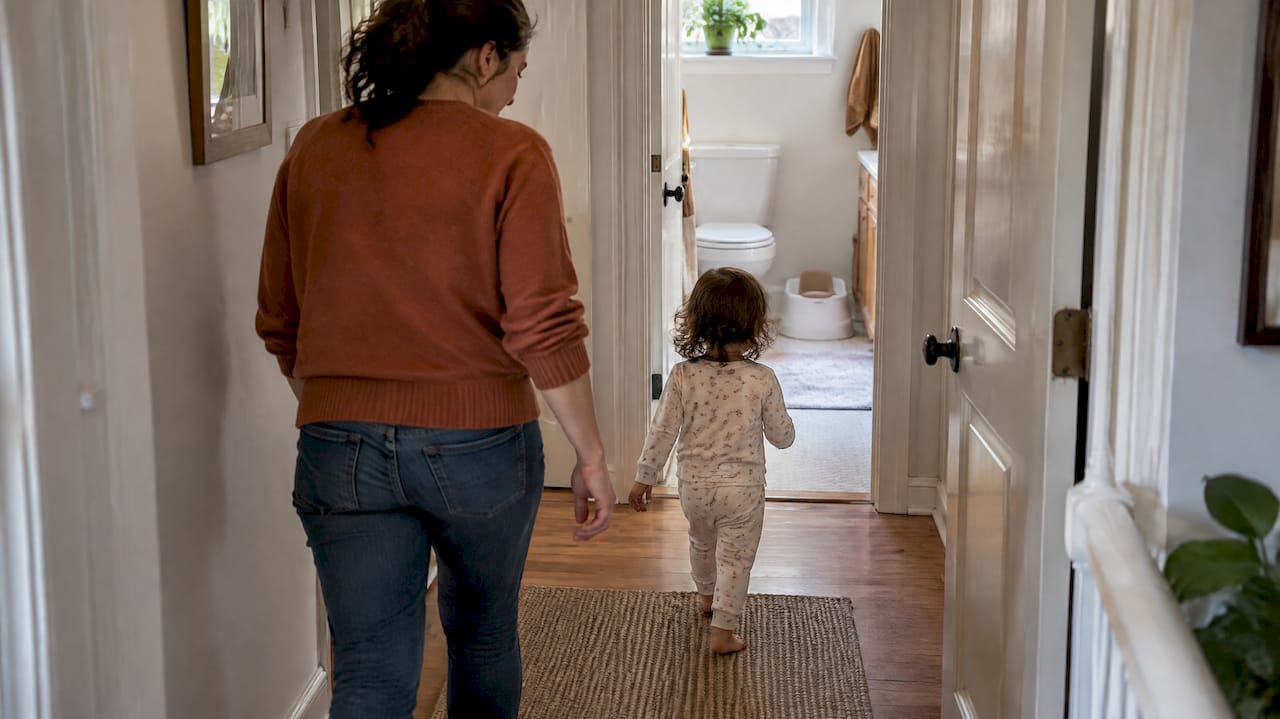
The most useful rule is to watch for readiness signs, not a birthday. Most children show signs of readiness between about 18 and 24 months, and the average U.S. start age centers closer to 27 months. Daytime dryness usually comes first, with nighttime control following months or even years later. Starting when your child is ready, rather than on a fixed schedule, tends to make the whole process shorter and less stressful.
TL;DR:
- Keep a weeklong log of physical, communication, and behavioral cues; consistently seeing at least two readiness signs matters more than brief interest.
- Many toddlers gain basic daytime dryness within weeks to months, while reliable nighttime dryness commonly develops between ages 4 and 7.
- Choose an approach based on temperament and schedule, then keep routines and language consistent; intensive practice requires caregivers to devote a few days to training.
- Contact a pediatrician about painful bowel movements, severe stool withholding, constipation, persistent daytime wetting after age 4, or sudden regression after success.
Table of Contents
- What the age ranges mean: early, typical, and late potty training
- Readiness signs and developmental milestones to watch for
- How long potty training usually takes and how to pace it
- Daytime vs nighttime expectations and when to call the pediatrician
- Common potty-training approaches and how to pick one that fits
- Practical start-up checklist and troubleshooting tips
- How Baby Bare Essentials helps you build a plan
- Every child’s timeline looks a little different
- A planner built for the potty-training stage (and everything around it)
- FAQ
- Sources
What the age ranges mean: early, typical, and late potty training
An age range only matters if you know what it’s actually telling you. Here’s how to think about the three general bands pediatric sources describe.
Starting before 18 months is considered early. At this age, most toddlers don’t yet have the muscle control or body awareness to recognize the urge to go, so progress is often slow and inconsistent. The Children’s Hospital of Philadelphia notes that starting too early can actually create stress and setbacks that stretch the process out longer than if you had waited.
The typical window falls between 18 and 30 months, with the CDC citing an average start closer to 27 months. Children in this range usually have enough bladder capacity and body awareness to notice the urge and enough language to tell you about it. Johns Hopkins Medicine describes this same 24 to 30 month window as when most children become physically capable of the task.
Past 30 to 36 months is considered later than average, though not a cause for alarm on its own. Some children simply need more time to build the physical and cognitive pieces, and some families wait longer for logistical or temperament reasons.
A few things worth remembering about these ranges:
- Average starting ages have crept later over the past several decades, partly tied to disposable diaper use and shifting cultural norms around convenience.
- “Average” doesn’t mean “correct.” Plenty of well-adjusted kids train earlier or later than the midpoint.
- Family schedule, number of caregivers, and childcare requirements can all shape when a family chooses to begin.
Variation is normal. A child who starts at 22 months and one who starts at 32 months can both be perfectly on track for their own development.
Readiness signs and developmental milestones to watch for
Age gives you a rough window, but readiness signs tell you whether now is actually a good time to start. Pediatric guidance groups these signs into three categories.
- Physical signs: your child stays dry for two or more hours at a stretch, has bowel movements on a fairly predictable schedule, and can walk, squat, and pull pants up and down without much help.
- Cognitive and communication signs: your child can follow simple two-step instructions, has words or gestures for “wet,” “dirty,” or “potty,” and shows early signs of symbolic play, like pretending to feed a doll, which reflects the same mental skill needed to plan a trip to the bathroom.
- Behavioral signs: your child shows curiosity about the toilet or underwear, dislikes the feeling of a dirty diaper, or wants to copy a sibling or parent.
The CDC’s milestone checklists are built around this same idea: look at what a child actually does, not just how old they are, and bring up any concerns at well-child visits so your pediatrician can weigh in with context specific to your child. Healthychildren points out that the cognitive piece matters just as much as the physical one: a toddler needs to connect a bodily sensation to a plan of action and then remember that plan even when distracted by play.
Pro Tip: Keep a simple log for a week before you start. If two or more signs show up consistently, not just once, that’s a stronger signal than any single moment of interest in the potty.
How long potty training usually takes and how to pace it
There’s no single timeline that fits every child, but a few patterns show up consistently across pediatric guidance.
- Many toddlers reach basic daytime dryness within a few weeks to a few months of consistent practice once they show real readiness signs.
- Bowel control often lines up closely with bladder control, though some children master one well before the other.
- Nighttime dryness is a separate skill that typically lags behind daytime training by months or years.
- Children who start before they’re truly ready often take longer overall, since the Children’s Hospital of Philadelphia and other sources link early starts to more frequent setbacks.
The most useful thing you can do for pacing is build a predictable daily rhythm: regular potty sits after meals, consistent language for the whole family to use, and short, calm practice sessions rather than long, pressured ones. Rushing tends to backfire. A child who feels hurried or shamed is more likely to resist or regress, while a relaxed, steady routine usually gets there just as fast, sometimes faster.
Daytime vs nighttime expectations and when to call the pediatrician
Daytime and nighttime control develop on different timelines because they depend on different things. Daytime dryness mostly comes down to recognizing the urge and acting on it. Nighttime dryness depends on the bladder’s capacity to hold urine for a full sleep cycle and on the brain’s ability to wake up or hold on during deep sleep, a maturation process that simply takes longer for most children.

HealthyChildren.org notes that many children continue wetting the bed well after they’re reliably dry during the day, and that consistent nighttime dryness commonly arrives between ages 4 and 7. Bedwetting through the preschool years is common and usually isn’t a medical concern on its own.
A few signs are worth a call to your pediatrician:
- Severe stool withholding or pain during bowel movements.
- Consistent daytime wetting that continues past age 4.
- Signs of constipation, which the NIDDK notes can stall training progress until it’s addressed directly.
- Sudden regression after a long stretch of success, especially alongside other behavior changes.
Common potty-training approaches and how to pick one that fits
Most families land on one of a few general approaches, and none of them is universally “right.” The best fit depends on your child’s temperament and your family’s schedule.
- Child-led, readiness-based training follows your toddler’s cues closely, introducing the potty gradually and letting interest build before pushing for consistency. This tends to suit cautious or slower-to-warm-up kids well.
- Routine-based training builds potty sits into the existing daily schedule, like right after breakfast or before bath time, which works well for families who already run on a predictable rhythm.
- Short, intensive training (sometimes called three-day training) clears a few days to focus heavily on practice, usually once a child already shows strong readiness signs. It can work quickly but asks for a lot of caregiver bandwidth up front.
- Diaper-free or elimination communication approaches start much earlier in infancy and focus on reading a baby’s cues before formal toilet training would typically begin. This path requires real attentiveness and isn’t a fit for every family’s logistics.
Whichever approach you choose, the NIDDK’s guidance on bladder training points to the same underlying principle across methods: consistency and positive reinforcement matter more than the specific technique. Avoid punishment or shaming around accidents. They’re a normal part of learning, not a behavior problem, and a calm response keeps the process moving rather than stalling it.
Pro Tip: Get every caregiver, grandparents and daycare staff included, using the same words and the same basic routine. Mixed signals from different adults are one of the most common reasons training stalls.
Practical start-up checklist and troubleshooting tips
A good first week doesn’t need to be complicated. Here’s a simple sequence to work from:
- Choose a potty chair or seat insert and let your child pick out a few pairs of training underwear to build buy-in.
- Set regular sits after meals and first thing in the morning, when the urge to go is naturally stronger.
- Keep each practice session short, calm, and pressure-free, even if nothing happens.
- Praise effort, not just results. Sitting and trying counts.
- Move to underwear during the day once your child shows two or three consecutive days of success.
Regressions happen, often around travel, a new sibling, starting daycare, or any disruption to routine. Keep the same calm language and routine rather than reverting to diapers immediately, unless the regression is tied to constipation or illness, in which case addressing that physical cause usually resolves the behavior too. For travel or daycare transitions, pack a small potty-training kit: spare underwear, wipes, and a portable seat if your toddler uses one. If resistance shows up and doesn’t ease after a week or two, it’s reasonable to pause for a few weeks and try again later rather than pushing through daily battles.
How Baby Bare Essentials helps you build a plan
A comprehensive potty-training section built around the readiness-first approach pediatric sources recommend can include a checklist to track physical, cognitive, and behavioral signs over time, plus both a short, intensive template and a longer two-to-four-week template depending on which approach fits your child. Daily progress logs help spot patterns, like whether accidents cluster around nap time or new foods, and a travel checklist keeps routines consistent during daycare transitions or trips. A typical two-to-four-week plan might include daily logs for sits and accidents, mealtime reminders, and a notes section for tracking regressions alongside any constipation or sleep changes worth mentioning at a child’s next well-child visit.
Every child’s timeline looks a little different
Some toddlers train in a focused week. Others take months, stall, and pick back up again later, and both patterns are normal. What matters more than hitting a particular month on the calendar is watching your own child’s signals and adjusting as you go, rather than measuring your family against a neighbor’s timeline or a milestone chart someone posted online.
It’s also worth protecting your own patience here. Potty training asks a lot of caregivers: consistency, calm responses to accidents, and a willingness to slow down when something isn’t working. Give yourself the same grace you’re giving your toddler.
— Rebeka
A planner built for the potty-training stage (and everything around it)
Potty training rarely happens in isolation. It overlaps with naps, daycare schedules, sibling adjustments, and a dozen other moving parts, which is exactly why having one place to track readiness signs and daily progress makes the process easier to manage. Our Physical Planner and Digital Edition both include potty-training checklists, progress logs, and templates alongside the pregnancy and newborn-stage tools many of our readers started with earlier.

Readiness windows commonly span 18 to 30 months, with the U.S. average centered closer to 27 months, which means there’s rarely one “right” week to start. Keeping a readiness log and a simple routine template on hand helps you catch the right window for your own child instead of guessing. If you want a hands-on resource for teaching body awareness alongside potty training, the Body Boundaries book series pairs well with early toilet training conversations. Visit Babybareessentials to see the full planner and find the potty-training section inside.
FAQ
What is the 10-10-10 rule for potty training?
The 10-10-10 rule is a casual guideline some parents use, suggesting frequent, brief potty sits during an intensive training push. It’s not an official pediatric recommendation, and readiness signs matter more than following any exact pattern.
What kind of potty should I buy?
A simple freestanding potty chair or a secure seat insert that fits your existing toilet both work well, and the better choice often comes down to your child’s comfort and confidence getting on and off independently. Letting your toddler help pick it out can boost their interest in using it.
What’s the best potty training method?
There isn’t one best method. Pediatric sources point to consistency, positive reinforcement, and matching the approach to your child’s readiness and temperament as the common threads across child-led, routine-based, and short intensive methods.
Is it normal for a 4 year old not to be potty trained?
It’s not unusual, though most children are day-trained by age 3 or 4 according to CDC milestone data, and nighttime dryness often takes longer still. If daytime training hasn’t progressed at all by age 4, or if you notice pain, constipation, or consistent withholding, it’s worth bringing up with your pediatrician.
Sources
- Milestones by 2 Years | Learn the Signs. Act Early. | CDC
- Toilet training (Children’s Hospital of Philadelphia)
Leave a Reply