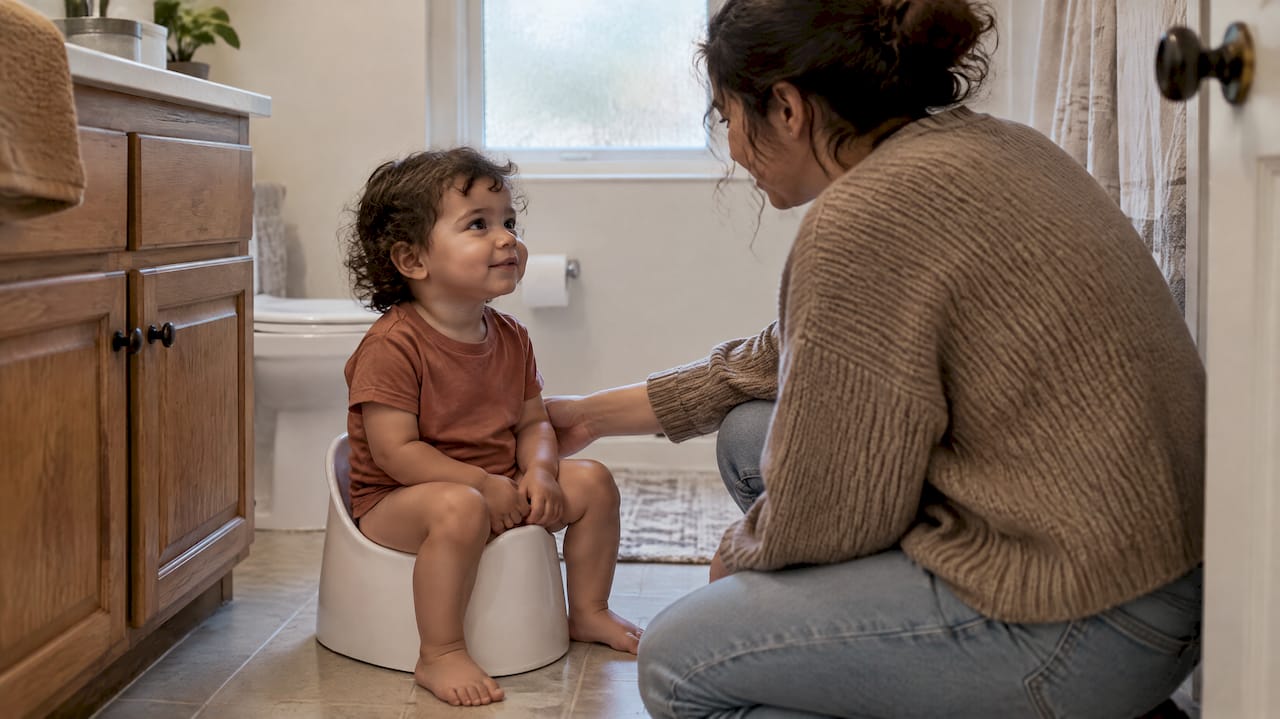
There is no single best potty training method. The one that works is the one matched to your child’s readiness and your family’s schedule, whether that’s a gentle, child-oriented approach, a structured behavioral plan like Azrin & Foxx, or a focused three-day push. Readiness and consistency, not the method’s name, predict success. Expect some accidents, occasional constipation, and nighttime dryness to take longer than daytime training.
TL;DR:
- Success depends on your child’s readiness and temperament, not on following the fastest method, and most children begin training between 18 months and 3 years.
- Common signs of readiness include staying dry for two hours, following simple directions, and showing interest in the bathroom, with temperament influencing whether a gentle or structured approach suits best.
- The three-day intensive method requires a cleared weekend and extra fluids, but it only works well if your child is already close to ready, otherwise it may prolong the process.
- Constipation and withholding are frequent causes of stalls, and addressing bowel habits with diet, posture, and timed sits is essential for progress.
- Using a planner to log signals, accidents, and caregiver communication helps maintain consistency and track progress across multiple caregivers and routines.
Table of Contents
- A quick look at the main potty training methods
- How to choose the right method for your child
- Step-by-step instructions for the major methods
- Why training stalls: constipation, regression, and power struggles
- Daily routines, daycare, travel, and nighttime basics
- Turning the plan into daily action
- What actually matters most in potty training
- How the planner keeps potty training organized
- Sources
- FAQ
A quick look at the main potty training methods
Before picking an approach, it helps to see your options side by side. Each method below works for healthy children, according to a systematic review of toilet training research, so the right choice depends on your child’s temperament and your household’s rhythm, not on which method is “proven best.”
- Child-oriented (readiness-based): You follow your toddler’s cues and interest level, introducing the potty gradually with no fixed deadline.
- Azrin & Foxx / behavioral method: A stepwise teaching sequence with built-in reinforcement, often completed over a single intensive day or a few focused sessions.
- Three-day intensive: You clear your calendar, stay home, and immerse your child in potty practice using naked or bare-bottom time and frequent prompts.
- Behavior-shaping with staged rewards: You break training into small milestones, such as sitting on the potty, then staying dry, then initiating on their own, with a short reward at each stage.
- Daycare-friendly hybrid: You combine a gentle, gradual approach at home with the consistent routine your daycare already uses during the day.
Most families borrow pieces from more than one method. A toddler who responds well to praise might do best with the reward structure of behavior-shaping, layered onto the relaxed pace of the child-oriented approach.
How to choose the right method for your child
Picking a method starts with watching your toddler, not the calendar. According to Healthychildren, most children in the United States begin training between 18 months and 3 years, and pediatric guidance prioritizes developmental signals over age alone.
Look for these readiness signs before you start:
- Your child stays dry for two hours or more at a stretch.
- They show interest in the bathroom or want to copy a sibling or parent.
- They can follow simple two-step directions.
- They have the motor skills to walk to the potty, sit down, and pull clothing up and down.
Temperament matters as much as readiness. A sensitive or cautious child often does better with the slower, lower-pressure pace of a child-oriented approach, where nothing feels rushed or forced. A more assertive, routine-loving toddler may thrive with the clear structure and quick feedback loop of a behavioral or three-day method.
Time commitment varies widely. Child-oriented training unfolds over weeks or months with light daily involvement. The three-day intensive demands a cleared weekend and near-constant attention. Behavior-shaping sits in between, needing daily consistency but not full-time focus.
Some stretches are simply the wrong time to start: a new sibling, a move, an illness, or active constipation. Pushing through these periods tends to backfire and can turn a temporary setback into a longer standoff.
If your toddler attends daycare, consistency across caregivers makes a real difference. Ask the staff:
- What potty schedule or cues do they already use during the day?
- What words do they use for bathroom needs?
- How do they respond to accidents?
- Can they track progress so you are not guessing at home?
Pro Tip: Write your child’s readiness signs and your chosen method directly into a planner so every caregiver, including grandparents and daycare staff, follows the same approach.
Step-by-step instructions for the major methods
Once you’ve chosen a method, the details matter more than the label. Here is how each major approach plays out in practice.
Child-oriented training
- Introduce the potty chair weeks before you expect full training, letting your child sit on it fully clothed.
- Use simple, neutral words for urination and bowel movements so there is no shame attached to either.
- Offer practice runs at natural points in the day, such as first thing in the morning and after meals, as recommended by Mayo Clinic.
- Keep each sit under five minutes and praise the attempt, not just the result.
- Let your child set the pace, moving to underwear only when they show consistent interest.
Azrin & Foxx behavioral method
- Spend a focused session teaching the full sequence: noticing the urge, walking to the potty, undressing, sitting, and redressing.
- Use a doll or demonstration to model the steps before asking your child to try.
- Reinforce success immediately with praise or a small reward, following the stepwise reinforcement pattern described in the systematic review on toilet training methods.
- Increase the time between prompts as your child shows fewer accidents.
- Fade rewards gradually once the skill becomes routine.
Three-day intensive method
- Prep checklist: Clear your weekend, stock up on easy-to-remove bottoms, and pick a day with no outside obligations.
- Hydration and timing: Offer extra fluids so your child needs to go more often, giving more chances to practice.
- Handling accidents: Expect several on day one; respond calmly and have your child help clean up without punishment, per Mayo Clinic’s guidance on avoiding shame-based responses.
- Fallback plan: If day three ends with frequent accidents and no progress, pause for a few weeks and try again rather than pushing through frustration.
Behavior-shaping with staged rewards
Break the skill into small milestones: sitting on the potty without protest, staying dry for an hour, telling you before an accident happens, and finally initiating on their own. Use a simple daily routine, such as a morning sit, an after-lunch sit, and a bedtime sit, with a sticker or small reward at each milestone reached.
A few notes apply across methods. Boys often learn to sit first and transition to standing later, once aim and confidence improve. Moving to underwear works best once your child stays dry for stretches during the day, and nighttime dryness typically lags daytime training by months, sometimes longer.
Why training stalls: constipation, regression, and power struggles
Many stalls trace back to one cause: withholding. When a child holds in a bowel movement, often out of fear or discomfort, stool becomes harder and painful to pass. That pain makes the child withhold even more, creating a cycle that NIDDK identifies as a common, often overlooked block in toilet training.

Timed sits of 15 to 45 minutes after meals can help rebuild a healthy bowel routine, according to NIDDK’s treatment guidance, which also recommends more dietary fiber and fluids as core measures. If constipation appears during training, you can typically keep practicing while treating it, unless symptoms are severe, and coordinating with your pediatrician toward a month of symptom-free stools before ramping training back up is a reasonable target.
Posture plays a bigger role than most parents expect. A small footstool that raises your child’s knees above hip level helps relax the pelvic floor and makes stool passage easier, according to HealthyChildren.org.
A few other troubleshooting points worth keeping in mind:
- Offer more fiber-rich foods and fluids throughout the day, not just around potty sits.
- Watch for stool withholding behaviors, such as hiding, crossing legs, or sudden quietness.
- If regression happens after weeks of success, treat it as information, not failure.
- Avoid punishment for accidents or regression. It tends to increase anxiety and slow progress.
Daily routines, daycare, travel, and nighttime basics
Small logistics decisions make daily training smoother. Loose-fitting pants with elastic waistbands let your toddler undress quickly, which matters when every second counts. Training pants or pull-ups can bridge the gap during transition periods without creating confusion about whether “real” underwear is in use yet.
A simple potty-break schedule removes the guesswork: right after waking, after each nap, and about 15 minutes after meals are natural windows, since bladder and bowel activity often follow eating and sleeping.
For daycare, share your chosen method and exact phrases you use at home so your toddler hears consistent language in both places. Ask staff to log accidents and successes so you can spot patterns.
Travel doesn’t have to derail progress:
- Pack a portable, foldable potty seat for unfamiliar bathrooms.
- Bring at least two full outfit changes per day away from home.
- Keep your usual potty-break timing as close to normal as the trip allows.
Nighttime dryness usually comes later than daytime control, so a waterproof mattress cover and overnight training pants are worth keeping on hand well after daytime success.
Pro Tip: Keep a small travel bag pre-packed with a portable potty seat, wipes, and a spare outfit so last-minute errands never catch you unprepared.
Turning the plan into daily action
Reading about methods only helps once it becomes a routine you actually follow. A planner works well here because it turns abstract advice into daily checkpoints: schedule practice runs, log accidents and successes, and track readiness signals over time instead of relying on memory.
A simple two-week plan might look like this: days one and two for choosing your method and prepping supplies, days three through seven for daily practice runs at the same three or four times each day, and days eight through fourteen for extending the time between prompts as accidents decrease.
Community forums often mention tactics like prompting every 30 to 60 minutes or short naked-at-home blocks to help a toddler notice bodily sensations faster. These work best when paired with the readiness signals and no-punishment approach covered earlier, logged consistently so you can tell what’s actually helping.
- Record readiness signs before day one so you have a clear starting point.
- Log each practice run, noting success or accident, to spot timing patterns.
- Track constipation symptoms separately so they don’t get mistaken for behavioral regression.
What actually matters most in potty training
The potty training industry loves a clean story: pick the right method, follow it exactly, and you’ll have a trained toddler in three days. That story undersells what the evidence actually shows. A systematic review of toilet training methods found that multiple approaches work for healthy children, which means the method is rarely the deciding factor. Readiness is.

Parents who chase a specific technique because it worked for a friend’s child often skip the groundwork: watching for actual developmental signs, checking in on bowel habits, and being honest about whether this particular week is realistic for a full-on push. The three-day method gets outsized attention online because it promises speed, but speed only happens when a child was already close to ready. Starting it too early just produces three stressful days and a longer road afterward.
If I had to point to one thing worth prioritizing above the rest, it’s patience with regression. A child who was dry for two weeks and suddenly isn’t has not failed, and neither have you. Treat it as new information about stress, constipation, or a change at home, not as a reason to restart with more pressure.
— Rebeka
How the planner keeps potty training organized
Potty training involves a lot of small, scattered details: what method you chose, which caregivers know the plan, how often accidents happen, and whether constipation is creeping back in. The Baby Bare Essentials Pregnancy Planner gives all of that one physical home instead of scattered notes and half-remembered details.

Inside, you can use the planner for:
- Daily logs to track practice runs, successes, and accidents in one place.
- Caregiver notes so daycare staff and family members follow the same language and schedule.
- Travel checklists that keep portable potty gear and spare outfits from getting forgotten.
- A readiness tracker to record the signs covered above before you commit to a method.
Whether you’re running a three-day intensive or a slower, staged plan, writing it down keeps everyone on the same page and keeps you from second-guessing your own memory at day ten. You can explore the Physical Planner and Digital Edition to see which format fits your household, or pair your potty training pages with low-key activity ideas from Mooshie Moments to keep toddlers engaged between sits.
This article is general information, not a substitute for advice from a qualified doctor. Consult a qualified healthcare professional about your own circumstances before acting on anything here.
Sources
- Healthychildren
- Potty training: How to get the job done – Mayo Clinic
- Treatment for constipation in children – NIDDK
- Effectiveness of different methods of toilet training – NCBI (systematic review/report)
FAQ
What is the most successful potty training method?
No single method outperforms the others for healthy children. A systematic review of toilet training research found that child-oriented and behavioral approaches like Azrin & Foxx both lead to successful training, so success depends more on matching the method to your child’s readiness and temperament.
What is the 10-10-10 rule for potty training?
This isn’t a term used in pediatric or clinical guidance from sources like the AAP, Mayo Clinic, or NIDDK, so there’s no official definition to point to. If you’ve seen it mentioned elsewhere, treat it as an informal parenting tip rather than an established clinical standard.
Is age 3 too late to potty train?
No. HealthyChildren.org (AAP) notes that training often begins between 18 months and 3 years, with most children fully trained by age 4, so starting at 3 still falls within a typical range. What matters most is readiness, not a specific birthday.
What is the 3-day potty training rule and how does it work?
The three-day method is an intensive approach where you clear your schedule, stay home, and immerse your toddler in frequent potty practice, often starting without underwear or pants to make sensations easier to notice. It works best for children who already show strong readiness signs, since the method relies on quick recognition and response to bodily cues rather than teaching those cues from scratch.
Leave a Reply