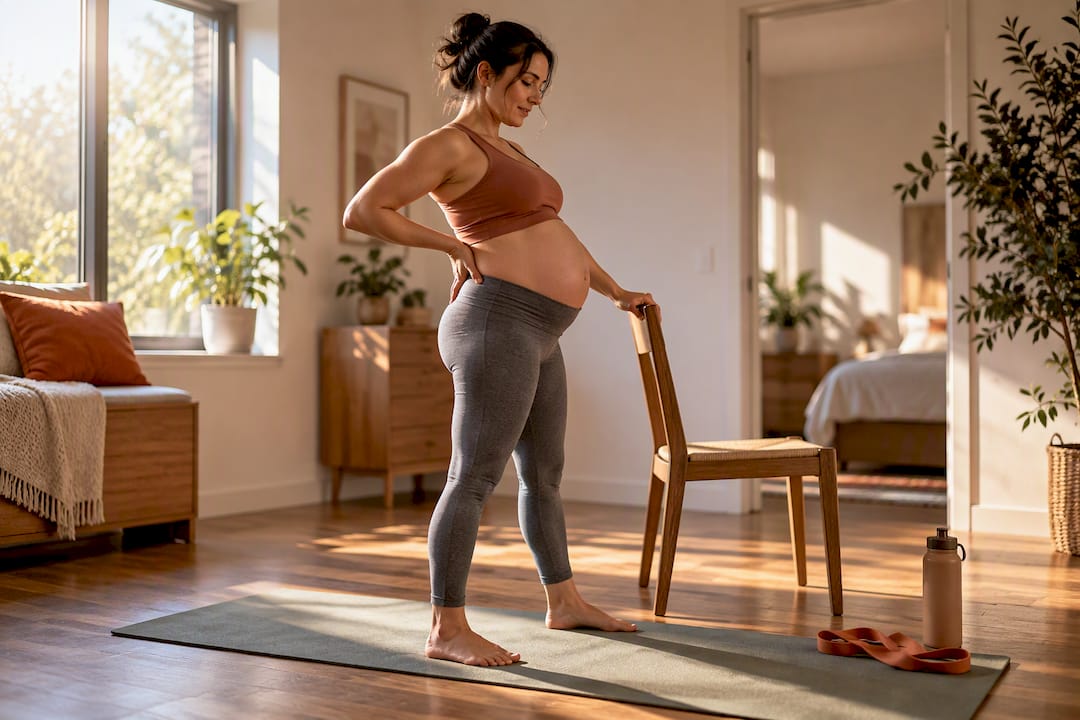
Conservative self-care is your best first step for pregnancy low back pain: better posture, gentle targeted movement, heat or cold, and supportive pillows or belts. Most soreness responds well to these simple changes within a week or two. If your pain is severe, sudden, or paired with other symptoms, call your prenatal clinician or seek urgent care right away.
TL;DR:
- Maintaining proper standing posture and using support belts can significantly reduce strain on your back during pregnancy, especially if you have a history of back pain or carry multiples.
- Gentle exercises like pelvic tilts, cat-cow stretches, and bridges can help alleviate discomfort, but you should stop if pain persists or worsens beyond two weeks.
- Sleeping on your side with supportive pillows between your knees and under your belly minimizes pressure and improves blood flow, especially after 20 weeks of pregnancy.
- Applying heat or cold packs safely, with your clinician’s guidance, offers effective relief for mild back pain without medication risks.
- Seek urgent care if you experience severe pain, vaginal bleeding, fluid leakage, contractions, fever, or sudden weakness, as these may indicate serious complications.
Table of Contents
- Why pregnancy causes low back pain and who is more likely to feel it
- Everyday relief methods to try now
- Safe exercises and stretches that ease the ache
- Sleep positions and pillow support that help you rest
- When to call your prenatal clinician
- Author tips and a one-week comfort tracker
- A gentle reminder about patience and partnership
- Track your symptoms with the Baby Bare Essentials Planner
- Guidelines and research behind this advice
- Sources
- FAQ
Why pregnancy causes low back pain and who is more likely to feel it
Your body is doing a lot of quiet engineering work. As your uterus grows, your center of gravity shifts forward, which stretches your abdominal muscles and puts more load on your lower spine. At the same time, pregnancy hormones relax the ligaments around your joints, including the pelvis, changing how weight moves through your hips and lower back.
This combination explains why so many expecting moms feel that dull ache by the second trimester. Some people are more prone to it than others.
- A history of back pain before pregnancy.
- Jobs or routines involving heavy lifting or long periods of standing.
- Carrying multiple babies.
- A previous pregnancy with pelvic girdle pain.
None of this means something is wrong. It means your body is adjusting, and the right habits can ease the strain.
Everyday relief methods to try now
Small daily adjustments add up. Start here.
- Fix your standing posture. Keep your ears, shoulders, and hips stacked, and avoid locking your knees or arching your lower back.
- Adjust how you sit. Use a chair with lower back support, keep both feet flat on the floor, and avoid crossing your legs for long stretches.
- Lift with your legs, not your back. Bend your knees, keep the object close to your body, and never twist while lifting.
- Use heat or cold safely. Apply a wrapped heating pad or ice pack to your lower back for 15 to 20 minutes at a time, and keep heat away from your belly to avoid overheating, according to ACOG’s guidance on back pain during pregnancy.
- Consider a support belt. A maternity support belt or abdominal binder can reduce strain by redistributing weight, but ask your clinician how to fit it correctly for your stage of pregnancy.
- Wear supportive, low-heeled shoes. Skip flat, unsupportive sandals and high heels alike.
- Take movement breaks. If you sit or stand for long periods at work, get up and stretch every 30 to 45 minutes.
Pro Tip: Keep a small pillow or rolled towel behind your lower back whenever you sit for long stretches, at your desk, in the car, or on the couch.
On medication, ACOG notes that acetaminophen is a well-studied option many clinicians approve for pregnancy pain relief, but it should only be used with your prenatal clinician’s guidance, and you should avoid combining multiple products that also contain acetaminophen.
Safe exercises and stretches that ease the ache
Gentle, targeted movement is one of the most reliable tools you have. A 2021 systematic review and meta-analysis found that exercise, along with TENS therapy, helped reduce pregnancy-related low back pain, though results varied across studies.
- Pelvic tilts. Stand with your back against a wall or get on your hands and knees, gently flatten your lower back, hold for a few seconds, and release.
- Cat-cow stretch. On your hands and knees, alternate arching and rounding your back slowly with your breath.
- Bridges or hip squeezes. Lying on your back with knees bent, gently lift your hips and squeeze your glutes, then lower with control.
- Seated hamstring stretch. Sit on the edge of a sturdy chair, extend one leg, and lean forward slightly until you feel a gentle stretch.
Water exercise is worth trying too. ACOG’s guidance on physical activity during pregnancy points out that buoyancy takes weight off your joints, which many find especially soothing in the third trimester.
Start with a few repetitions once a day and build up gradually. Pain is your stop signal: if a movement hurts, ease off and try a gentler version. If discomfort continues past two weeks or limits your daily activities, ask your clinician about a referral to a prenatal physical therapist.
Pro Tip: Pair pelvic tilts with your morning routine, like brushing your teeth, so the habit sticks without adding another task to your day.
Sleep positions and pillow support that help you rest
How you sleep matters just as much as how you move during the day. Side sleeping, especially on your left side, tends to ease pressure on your lower back and improve blood flow.
- Place a pillow between your knees to keep your hips aligned.
- Tuck a small pillow or wedge under your belly for extra support.
- A full-length body pillow can support your back, belly, and knees all at once, cutting down on nighttime shifting.
- Choose a mattress with enough firmness to support your spine without feeling hard.
After 20 weeks, ACOG recommends avoiding prolonged time flat on your back, since it can put pressure on a major vein and affect blood flow. Side sleeping with good pillow support solves both problems at once.
When to call your prenatal clinician
Most pregnancy back pain is manageable at home, but some symptoms need prompt attention. The CDC’s HEAR HER campaign lists warning signs that call for urgent evaluation.
- Severe or persistent belly or back pain.
- Vaginal bleeding or fluid leakage.
- Regular contractions before your due date.
- Fever or painful urination.
- Sudden weakness, numbness, or one-sided leg swelling.
If your back pain is severe, getting worse, or lasts more than two weeks despite consistent self-care, call your prenatal clinician. They may suggest physical therapy, adjust your pain relief plan, or recommend urgent evaluation if something more is going on.
Author tips and a one-week comfort tracker
A short daily routine keeps things simple: pelvic tilts in the morning, a cat-cow stretch midday, and a short walk in the evening.
- Rate your pain from 0 to 10 each morning and again after activity.
- Note what you were doing right before the pain flared.
- Track what helped, whether heat, a stretch, or a short rest.
- Bring your notes to your next prenatal visit to guide the conversation.
If your pain feels more like it’s centered in your pelvis or hips rather than your lower back, it may be worth reading more about pelvic girdle pain specifically.
A gentle reminder about patience and partnership

Back pain during pregnancy is common, and it rarely points to anything serious. A 2026 meta-analysis on conservative musculoskeletal interventions found that combining posture changes, movement, and support tools produced more consistent relief than relying on any single approach alone, though the review noted a need for more research given the variety of studies involved.
Give conservative care a real trial, track what helps, and loop your clinician in when something isn’t working. That partnership is often the fastest path to feeling like yourself again.
— Rebeka
Track your symptoms with the Baby Bare Essentials Planner
Figuring out what actually eases your back pain gets easier when you can see your own patterns instead of relying on memory. A pregnancy planner including trackers and checklists can help hold exactly this kind of detail, from daily symptoms to questions worth raising at your next appointment.

- Log pain levels, triggers, and what helped in a dedicated place.
- Bring your notes into prenatal visits instead of trying to recall a week’s worth of details.
- Keep pregnancy tracking and early parenthood planning together.
If you’d like a structured way to track your comfort week to week, take a look at the Baby Bare Essentials Pregnancy Planner.
Guidelines and research behind this advice
This article draws on clinical guidance from ACOG and the CDC’s HEAR HER campaign, along with practical recommendations from the Mayo Clinic and recent research on conservative interventions for pregnancy-related back pain.

This article is general information, not a substitute for advice from a qualified doctor. Consult a qualified healthcare professional about your own circumstances before acting on anything here.
Sources
- Urgent Maternal Warning Signs and Symptoms | HEAR HER Campaign | CDC
- Meta-analysis on conservative musculoskeletal interventions (2026) | PubMed
- Back pain during pregnancy: 7 tips for relief | Mayo Clinic
FAQ
How can I relieve back pain during pregnancy?
Start with posture corrections, gentle stretches like pelvic tilts and cat-cow, and safe use of heat or cold on your lower back. A 2026 meta-analysis found combining several conservative measures, rather than relying on just one, tends to bring more consistent relief.
Is back pain common in early pregnancy?
Yes, some women notice mild back discomfort in the first trimester, though it typically becomes more noticeable as the belly grows in the second and third trimesters. It’s related to hormonal changes and shifting posture rather than anything concerning on its own.
Is it okay to put a heating pad on your back while pregnant?
Yes, a wrapped heating pad on your lower back is generally considered safe, according to ACOG, as long as you avoid placing heat directly on your belly and keep sessions to about 15 to 20 minutes. Always use a low or medium setting rather than high heat.
Is it normal to have lower back pain at 20 weeks pregnant?
Yes, lower back pain around 20 weeks is common as your uterus grows and your posture shifts to accommodate it. If the pain is mild and eases with rest, stretching, or posture changes, it’s typically not a cause for concern, but persistent or severe pain is worth mentioning to your prenatal clinician.
Leave a Reply