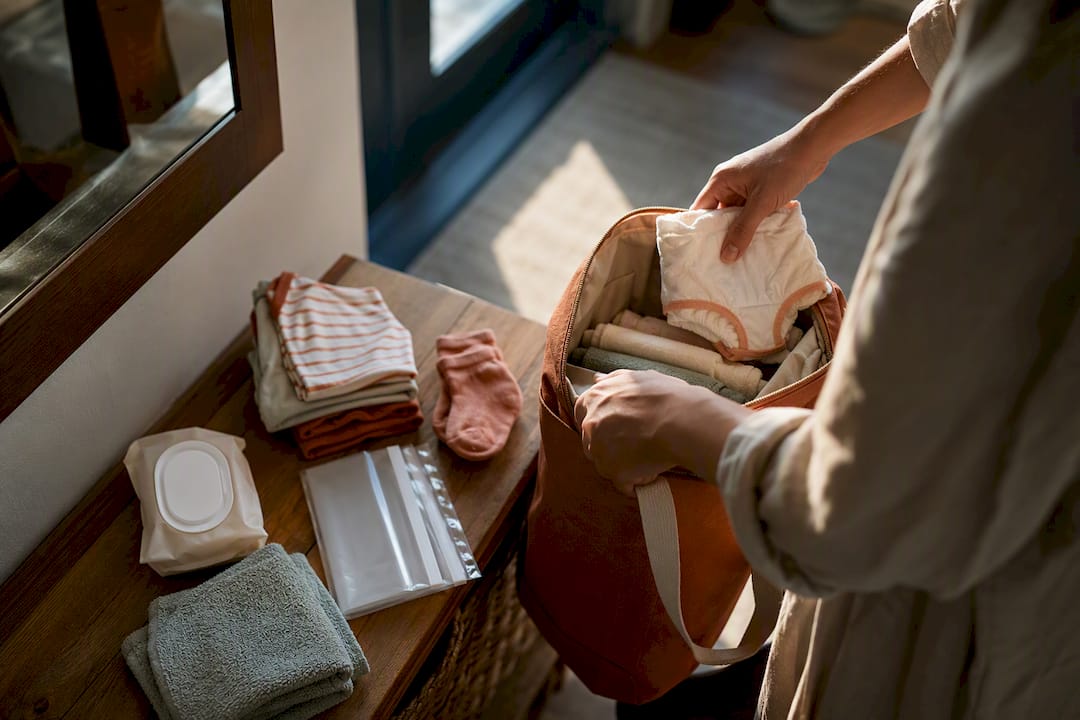
Yes, you can travel while potty training, and most families do it successfully with the right prep. Pack a travel potty kit, plan restroom stops in advance, and stick to your usual cues. If your child started training less than two to four weeks ago or your household is dealing with a move, illness, or another big stressor, consider pushing the trip back.
TL;DR:
- Pack a comprehensive travel potty kit that includes a portable potty, liners, wipes, a wet bag, extra outfits, and safety accessories to reduce accidents and maintain routine.
- Plan restroom stops every 60 to 90 minutes on road trips, and use a schedule for bathroom offers during flights and train journeys, rather than waiting for cues.
- Use pull-ups for trips longer than two to three hours or when the child is new to training, but rely on underwear for established trainers with frequent stop opportunities.
- Postpone travel if potty training is less than two to four weeks underway or during major disruptions, and instead focus on routine consistency at home first.
- Keep an organized, multi-zone packing system and practice travel routines at home beforehand to ensure familiarity and reduce stress during trips.
Table of Contents
- Potty Training Travel: What to Pack in Your Kit
- Car, Plane, or Train: What Changes for Each Trip
- Pull-Ups or Underwear for Travel?
- Where Everything Lives on Travel Day
- When to Postpone Potty Training Travel
- Handling Accidents Without Losing Ground
- Practice Drills That Make Travel Feel Familiar
- Tracking Practice and Packing With a Planner
- Keeping the Same Routine When Everything Else Changes
- Talking to Grandparents, Sitters, and Travel Companions
- Picking a Place to Stay With Potty Training in Mind
- Managing Nighttime Potty Training Away From Home
- Helping Your Toddler Handle the Stress of a New Place
- A Note From Rebeka: Trips Don’t Have to Break Your Progress
- Pack Smarter With a Ready-Made Travel Checklist
- Sources
- FAQ
Potty Training Travel: What to Pack in Your Kit
A solid potty training travel kit is the difference between a calm rest stop and a meltdown in a gas station parking lot. The core idea, backed by pediatric travel guidance, is that a well-packed travel potty kit reduces accidents and keeps consistency when your child’s normal bathroom and routine disappear for a few days.
Here’s what belongs in that kit:
- Portable potty or seat reducer: gives your toddler a familiar shape to sit on instead of a giant unfamiliar toilet.
- Disposable liners: turn any potty into a no-cleanup situation, which matters at a rest stop with no working sink.
- Wipes and hand sanitizer: for both ends of the process, since gas station bathrooms rarely stock either.
- Wet bag: keeps soiled clothes contained and away from clean items in the same bag.
- Waterproof pad or “piddle pad”: protects car seats and hotel beds from accidents mid-trip.
- Two to three full spare outfits: more than you think you need, because travel days multiply accidents.
- Disposable toilet seat covers: useful for regular public toilets when your toddler is ready to skip the portable seat.
- Compact stain or odor spray: small enough for a glove compartment, useful for car seat fabric and clothing.
Most compact travel potties and foldable seat reducers are TSA compliant and can go in a carry-on, though a standalone potty needs to be empty and clean before it goes through the checkpoint. For car trips, weight and size matter less. Keep a larger backup stash in the trunk and a slim, grab-and-go version in your diaper bag or backpack.
Pro Tip: Build two kits, not one: a “trunk kit” with backup supplies stays in the car all week, while a “grab bag” version with just the essentials travels with you into restaurants, rest stops, and hotel lobbies.
Car, Plane, or Train: What Changes for Each Trip
Every mode of travel throws a different curveball at potty training. Here’s how to handle the three most common ones.
- Road trips. Plan bathroom stops every 60 to 90 minutes rather than waiting for a request, since a distracted toddler often won’t announce the urge until it’s urgent. Favor rest areas with family restrooms and parks over standalone gas stations. They tend to be roomier and cleaner. Bring the portable potty into the car for true emergencies between stops. For the car seat itself, use a slim, manufacturer-approved waterproof liner rather than a folded towel or extra padding, since bulky material under the harness can throw off the seat’s fit and safety.
- Flights. Take your toddler to the bathroom right before boarding, even if they just went. Once seated, keep a mini kit in the seat back pocket: a couple of wipes, a spare outfit, and a plastic bag. Pull-ups work well as a safety net during takeoff, landing, and seatbelt-sign stretches when you can’t move freely. If your toddler needs the bathroom while the sign is on, tell the flight attendant. Most crews will let you use the aisle-side lavatory once it’s safe to move, even before the sign officially turns off.
- Trains. Trains tend to be the most forgiving option, since most let passengers move around the cabin whenever they want. Time your child’s potty breaks around scheduled stops when possible, since station restrooms are usually larger and easier to manage than the closet-sized bathroom onboard. If you do use the train bathroom, bring your seat reducer. Train toilets are notoriously oversized for small toddlers.
Across all three, the same principle applies: offer the bathroom on a schedule, not just when your toddler asks. A distracted child rarely requests a break early enough to avoid an accident.
Pull-Ups or Underwear for Travel?
The right choice depends on how new the training is and how long the trip runs, not on what feels more “grown-up.” A simple rule of thumb: if your child started training recently or the trip stretches past two to three hours without easy bathroom access, lean on pull-ups. If they’re an established trainer with a strong track record and you can guarantee frequent stops, underwear keeps the habit intact.
Several families find a hybrid approach works best for travel days specifically:
- Underwear over a pull-up during the practice stretch at home before the trip, so the sensation of wetness still registers if there’s an accident.
- Underwear during the day when stops are frequent, switched to a pull-up for naps or the flight itself.
- Pull-ups for the first and last hour of any long car ride, when everyone (including you) is tired and less alert to cues.
Whatever you choose, don’t let it become a step backward. A pull-up during a flight isn’t a training failure. It’s a reasonable accommodation for a situation with no accessible bathroom for 20 minutes at a time.
On hydration: keep offering water normally. Cutting fluids to reduce accidents usually backfires, concentrating urine and making the urge stronger and more sudden when it does hit. Offer smaller amounts more often instead of restricting overall intake.

Where Everything Lives on Travel Day
Organization on travel day comes down to three zones: the trunk, the carry-on or day bag, and a small on-person pouch.
- Trunk kit: backup wipes, extra liners, a full spare outfit or two, and the larger portable potty if you’re driving.
- Carry-on or day bag: the seat reducer or folding potty, a wet bag, one spare outfit, and a travel pack of wipes.
- On-person pouch: just the basics for a quick dash to a bathroom. A few wipes, a small sanitizer, and a plastic bag for surprise laundry.
For fast cleanups, keep a “quick-clean layout” ready: wipes on top, a folded changing pad next in the bag, spare clothes underneath, and the wet bag folded flat at the bottom for immediate use. That order lets you grab exactly what you need without digging through the whole bag while a toddler wriggles on your lap.
Pro Tip: Keep a permanent, restocked kit in the vehicle year round, separate from the one you pack for flights. You’ll never scramble to assemble one at 6 a.m. before a road trip again.
Count on packing more outfits than the trip length suggests. A general guide is one full outfit per half day of travel, since accidents cluster during transitions like boarding, unloading, and new environments.
When to Postpone Potty Training Travel
Travel and potty training can coexist, but not every week is the right week to combine them. If your family is experiencing a move, illness, or another major disruption, delaying toilet training until things settle is the guidance most pediatric sources point to, and travel counts as exactly that kind of disruption if training is brand new.
A reasonable benchmark is two to four weeks of consistent success at home before adding travel into the mix. Look for these readiness signs first:
- Your toddler stays dry for stretches of two hours or longer during the day.
- They can tell you they need to go, even if it’s last minute.
- Daytime accidents have dropped to occasional rather than routine.
If the trip is locked in and can’t move, scale back your expectations rather than canceling the effort. Lean harder on pull-ups, treat the days as maintenance instead of progress, and plan to pick training back up at full intensity once you’re home.
Handling Accidents Without Losing Ground
Accidents during travel are common and expected, and how you respond matters more than the accident itself for whether your toddler regresses afterward.
A simple cleanup workflow keeps things fast and low drama:
- Contain: move your toddler to a stable surface before removing wet clothing to limit spread.
- Change: swap into dry clothes immediately, using your on-person pouch if you’re away from the main kit.
- Bag: seal soiled items in the wet bag right away, separate from clean supplies.
- Disinfect: wipe down the car seat or stroller surface with your travel spray once you’re back at the vehicle or hotel.
Your language matters as much as your technique. Keep your tone flat and neutral: “Oops, let’s get you changed” does far more for confidence than a sigh or a frustrated tone, even an unintentional one. Toddlers pick up on frustration quickly, and that reaction, not the accident, is often what triggers a longer regression.
Once you’re home, give it a few days of quiet routine before judging progress. Return to your normal potty schedule, skip any punishment or extra pressure, and treat the trip as a pause rather than a setback.
Practice Drills That Make Travel Feel Familiar
The single best predictor of a smooth trip is practicing with the travel potty at home first, so it feels like something your toddler already uses rather than a strange object they meet for the first time in an airport.
Try this sequence in the two weeks before a trip:
- Set up the travel potty or seat reducer in your regular bathroom and use it for a few sessions, so the smaller size and different shape stop being novel.
- Play a “sit and wait” game for a minute or two at a time, building tolerance for sitting somewhere new without immediate results.
- If you’re flying, play a recording of airplane bathroom sounds, or practice sitting in a small enclosed space like a closet, to soften the shock of a tiny lavatory.
- On the trip itself, offer the bathroom before every boarding, departure, or long stretch in the car, turning it into a predictable ritual rather than a negotiation.
- Use a small travel-only reward, like a sticker chart just for the trip, to keep motivation high when the environment keeps changing.
Pro Tip: Bring one visual prompt from home, like a laminated potty chart or a favorite reward sticker sheet, so travel days still feel anchored to your normal routine.
Tracking Practice and Packing With a Planner
Once you’ve built the checklist and drills above, keeping them organized across a busy trip is its own task. This is where a structured tool like the Baby Bare Essentials Pregnancy Planner earns its place in your bag, not just for pregnancy but for the toddler stage it also covers.
The planner’s potty training section gives you a packing checklist template you can copy before every trip, a practice schedule to log the two to four weeks of at-home readiness work, and a simple habit tracker for spotting patterns in accidents or successes. Instead of rebuilding your kit list from memory each time, you check it against a page you already filled out. It’s a straightforward complement to the routines and readiness guidance covered here, not a replacement for them.
Keeping the Same Routine When Everything Else Changes
Consistency, more than any product, is what carries potty training through a trip. The goal isn’t to recreate your home bathroom. It’s to recreate the rhythm your toddler is used to.
A few ways to protect that rhythm on the road:
- Keep the same verbal cue. If you always say “let’s go potty” at home, use the exact same phrase in the car, the airport, or grandma’s house. New wording adds friction your toddler doesn’t need mid-trip.
- Offer the bathroom on your home schedule. If you normally prompt every 90 minutes, keep that interval on travel days instead of waiting for signs of distress.
- Bring the same potty seat or reducer, not a new one. A hotel or rental’s mismatched bathroom setup is easier to handle when the seat itself is familiar.
- Protect nap and bedtime timing where you can. Overtired toddlers have far less bladder control and far less patience for asking for help in time.
Small deviations are fine. What derails progress is dropping the routine entirely for a week and expecting it to snap back the moment you’re home.
Talking to Grandparents, Sitters, and Travel Companions
Anyone spending unsupervised time with your toddler during the trip needs the same script you use, not a watered-down version. Write it down if you have to. A tired grandparent at 9 p.m. will forget verbal instructions faster than you’d expect.
Cover a few specifics before you hand off supervision:
- The exact phrase you use to prompt a bathroom trip, so your toddler hears something familiar.
- How often to offer, even without a request, since travel companions often wait for a verbal ask that won’t come in time.
- Where the travel potty kit lives and how to use the portable seat if it’s their first time seeing it.
- What to do calmly if there’s an accident, so a well-meaning but flustered response doesn’t undo your child’s confidence.
For longer trips involving multiple caregivers, like a family reunion or a multi-day visit, it helps to designate one adult per outing as the “potty point person.” That removes the ambiguity of everyone assuming someone else is watching for cues.
Picking a Place to Stay With Potty Training in Mind
Not every rental or hotel room is built with a toddler’s bathroom needs in mind, and a few details are worth checking before you book.
Look for a bathroom that’s close to the bedroom, ideally without a hallway or stairs between them, since middle-of-the-night trips need to be fast. A room with an en-suite bathroom beats a shared hallway bathroom every time for this stage. If you’re renting a house or condo, ask about a second bathroom on the same floor as your toddler’s sleeping area. It cuts down on middle-of-the-night stumbling.

Also worth a quick check: whether the toilet is a standard height your seat reducer will fit, and whether the space is large enough to bring in a portable potty for backup. Some vacation rentals have unusually tall or oddly shaped toilets that make even a seat reducer awkward.
If you have any choice in the matter, a ground-floor room or one near a shared bathroom in a hotel hallway is a real advantage during the middle of the night, when you’re moving half-asleep and can’t afford a long walk.
Managing Nighttime Potty Training Away From Home
Nighttime training usually lags behind daytime training by months, and travel is not the moment to push that timeline forward. If your toddler still wears a pull-up or diaper at night at home, keep doing exactly that on the trip, regardless of how confident daytime progress feels.
A few adjustments make nighttime easier in an unfamiliar space:
- Keep a small night-light or use your phone’s flashlight app so a half-asleep toddler can find the bathroom without full lights waking them further.
- Protect the mattress with a waterproof pad, especially in a rental or hotel bed you don’t want to damage.
- Keep the bathroom path clear of luggage and cords, since a nighttime trip in a strange room already carries more stumbling risk than one at home.
- If a nighttime accident happens, change the sheets calmly and go straight back to sleep rather than turning it into a conversation until morning.
Travel disrupts sleep depth and timing, both of which affect bladder control overnight. Don’t read a nighttime accident on a trip as new information about your toddler’s daytime progress. They’re two different skills on two different timelines.
Helping Your Toddler Handle the Stress of a New Place
Toddlers absorb your stress level almost immediately, and a trip crammed with new sights, sounds, and schedules is already a lot to process before you add a potty routine on top of it. Watch for the difference between simple travel excitement and genuine overwhelm. Clinginess, sudden shyness, or a spike in accidents right after arriving somewhere new is a common signal.
A few things help settle a toddler faster than logic or explanation will:
- Give a heads-up before transitions. A simple “we’re going to the airport now, then a plane, then Grandma’s house” primes them for what’s coming.
- Bring one familiar object everywhere. A favorite stuffed animal or blanket does more emotional work than any amount of reassurance from you.
- Keep your own tone steady, especially during accidents. Your calm is the fastest way to communicate that nothing is actually wrong.
- Build in downtime. A packed itinerary with no rest stretches wears toddlers out fast, and exhaustion is one of the biggest drivers of both accidents and meltdowns.
Progress during travel is a bonus, not the goal. The goal is getting through the trip with your toddler’s confidence intact.
A Note From Rebeka: Trips Don’t Have to Break Your Progress
I’ve talked with enough parents mid-panic over a canceled flight and a toddler mid-accident to know the fear behind this question isn’t really about logistics. It’s about losing weeks of hard-won progress in one bad afternoon. It usually doesn’t happen that way. A calm response and a decent kit carry most families through.
Give yourself permission to prioritize connection over perfection this week. A pull-up on a plane isn’t a failure. It’s just Tuesday.
— Rebeka
Pack Smarter With a Ready-Made Travel Checklist
A planner can help organize packing lists and travel preparations by providing templates organized by trip type.

Inside the potty training section, you’ll find a packing checklist you can reuse trip after trip, a practice schedule for tracking the two to four weeks of at-home readiness work before you travel, and a simple tracker for spotting patterns in accidents so you know if a trip actually set you back or just felt that way in the moment.
The Physical Planner runs $120 as a one-time purchase, and the Digital Edition is available for $25 if you’d rather work from a tablet or phone on the road. Before your next trip, pull up the checklist template, fill in your specific dates, and pack against it instead of memory.
Sources
- Potty training your child – Seattle Children’s
- Potty training while traveling – Pampers
- The definitive guide to potty training travel kits – ModernMom
- Potty training road trip bathroom breaks – SmartStops
FAQ
How Do You Travel With a Toddler Who Is Potty Training?
Pack a travel potty kit with a portable seat, liners, wipes, and spare clothes, then plan bathroom stops on a schedule instead of waiting for a request. Keep your usual verbal cues and offer the bathroom before every boarding, departure, or long car stretch to preserve the routine your toddler already knows.
What Is the 10, 10, 10 Rule for Potty Training?
Definitions of this rule vary across sources, and there isn’t one consistent, widely agreed version tied to established pediatric guidance. Rather than rely on a specific number pattern, focus on scheduled bathroom offers every 60 to 90 minutes during travel, which route-planning guidance for road trips supports.
What Are the Essentials for Potty Training While Traveling?
The core travel potty kit includes a portable potty or seat reducer, disposable liners, wipes, hand sanitizer, a wet bag, a waterproof pad, and at least two full spare outfits. A well-packed kit reduces accidents and keeps routines consistent when your child’s normal bathroom setup isn’t available.
What Is the Best Portable Potty for Travel?
The strongest options are lightweight, foldable seat reducers or compact standalone potties that fit inside a carry-on or diaper bag without adding much bulk. Most compact models are TSA compliant for carry-on travel as long as a standalone potty is empty and clean before screening.
When Should We Delay Potty Training Because of Travel?
Delay if training started less than two to four weeks ago, or if your family is dealing with a move, illness, or another major disruption. Pediatric guidance recommends waiting until the child’s environment is stable before pushing forward with new training, and an upcoming trip counts as that kind of disruption for a brand-new trainer.
Leave a Reply