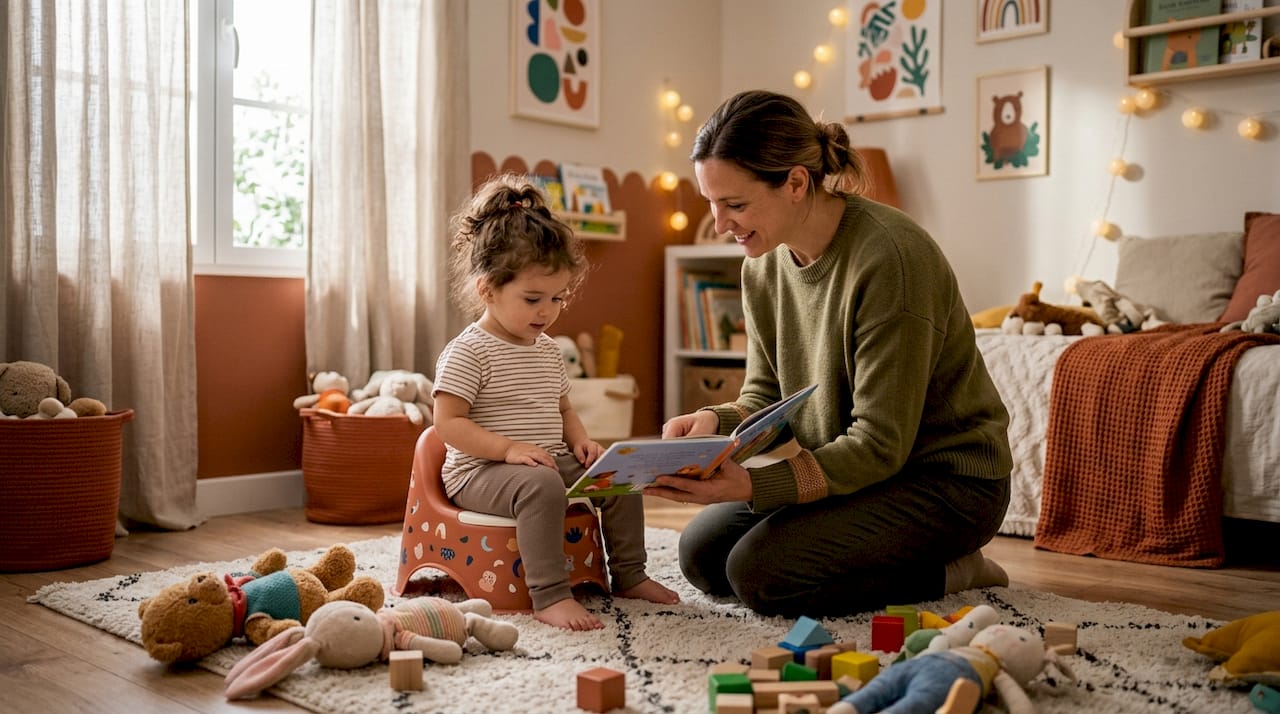
Potty training readiness is the developmental stage when a child has the physical, behavioral, and cognitive skills needed to begin learning to use the toilet independently. It is not about hitting a specific birthday. According to Zero to Three, about 22% of children are diaper-free by age 2½, while 88% reach that milestone by age 3½. Most US children begin showing signs of readiness between 18 and 30 months, though the window varies widely from child to child.
Readiness spans three overlapping areas: physical control, behavioral motivation, and cognitive understanding. When all three align, training tends to go faster and with far less friction. When even one is missing, pushing ahead often backfires.
Here is a quick checklist of core readiness signs to watch for:
- Stays dry for at least 2 hours during the day
- Has predictable bowel movements
- Can walk steadily, sit on a potty, and pull pants up and down
- Shows awareness of a wet or dirty diaper
- Expresses interest in the toilet or “big kid” underwear
- Can follow simple two-step instructions
- Uses words, signs, or gestures to communicate bathroom needs
How potty training readiness works: the physical signs
The body has to be physically capable before training can succeed. Mayo Clinic identifies dry diapers lasting at least 2 hours, predictable bowel movements, and the motor skills to walk, sit on a potty, and manage clothing as the core physical milestones.

Before about 18 months, most children cannot fully control their bladder and bowel muscles. That is not stubbornness. It is anatomy. Pushing training before those muscles mature tends to extend the process rather than shorten it.
Physical signs to look for in daily routines:
- Dry diapers for 2+ hours or a dry diaper after a nap
- Regular, predictable bowel movements, often after meals
- Steady walking and the ability to sit down and stand up without help
- Pulling pants up and down independently
- Facial expressions or pausing activity when urge to eliminate occurs
That last one is easy to miss. A toddler who suddenly freezes, squats, or retreats to a corner is giving you a clear physical cue. Catching those moments early helps you introduce the potty at the right time.
Behavioral signs that show your child is motivated to start
Motivation matters more than most parents expect. A child who wants to use the potty will cooperate. One who feels forced will resist, sometimes for months. The AAP notes that behavioral readiness includes a desire for independence, awareness of wetness discomfort, copying adults, and asking to use the potty.
Watch for these behavioral cues:
- Asking to wear underwear or showing interest in “big kid” pants
- Following you to the bathroom and watching with curiosity
- Pulling at or removing a wet diaper because it feels uncomfortable
- Requesting a diaper change after eliminating
- Imitating toileting behavior after watching a parent or sibling
Emotional stability plays a role here too. A child going through a big transition, like a new sibling, a move, or starting daycare, may not have the emotional bandwidth for potty training right now. That is completely normal. Waiting a few weeks for the dust to settle often makes the whole process smoother.
One practical way to nurture behavioral readiness is to read books about using the potty together or let your toddler pick out their own underwear. Small choices build ownership, and ownership builds motivation. You can also explore how music supports emotional transitions during this stage, since toddlers who feel calm and secure tend to engage more willingly with new routines.

Cognitive skills your child needs to understand the process
Physical control and motivation are not enough on their own. Your child also needs to understand what is happening in their body and what you are asking them to do. Mayo Clinic describes cognitive readiness as the ability to recognize elimination urges, follow simple instructions, and communicate bathroom needs.
Key cognitive milestones to look for:
- Recognizing the urge before it happens, not just after
- Following two-step instructions like “pull down your pants, then sit”
- Using words, signs, or gestures to say they need to go
- Understanding cause and effect, such as “pee goes in the potty”
- Cooperating with a task for a minute or two without losing focus
Starting training before these cognitive pieces are in place can create anxiety and actually prolong the process. A child who cannot yet anticipate the urge will have accidents constantly, which can feel discouraging for both of you. Normalizing bathroom language early, using simple words like “pee” and “poop,” helps build the vocabulary your child needs to communicate their needs clearly.
Pro Tip: Avoid flushing the toilet while your child is sitting on it during early training. The noise can startle toddlers and create an aversion to the bathroom that takes weeks to undo.

What the typical potty training timeline looks like
Training rarely happens in a straight line, and that is worth knowing upfront. Most children take 3 to 6 months to learn to use the toilet reliably. Girls typically learn faster than boys, though individual variation is wide.
The general progression looks like this:
- Weeks 1–2: Introduce the potty chair. Let your child sit on it fully clothed once a day, no pressure. The goal is familiarity, not results.
- Weeks 3–4: Move to sitting without a diaper. Show them how to pull pants down first. Keep sessions brief, around 5 minutes.
- Ongoing: Watch for cues and take your child to the potty quickly when you spot them. Praise every attempt, even if nothing happens.
- Later stage: Introduce training pants once your child is using the potty with some consistency during the day.
Nighttime dryness comes last, often months after daytime training is solid. A waterproof mattress pad is a practical investment for this phase.
The Merck Manual advises that a timing method, where you take your child to the potty at predictable intervals, works well when bowel and bladder habits are already regular. If your child’s patterns are still unpredictable, waiting a bit longer before starting is the better call.
Accidents are part of the process. Treating them matter-of-factly, “Oops, pee goes in the potty. Let’s try again,” keeps the experience low-stress and keeps your child willing to keep trying.
How to handle setbacks and when to call your pediatrician
Resistance is one of the most common potty training challenges, and it usually signals one thing: your child does not feel in control. Stool withholding is a classic example. When a child refuses to have a bowel movement in the potty and starts holding it in, the result can be constipation and real discomfort.
The most effective response is to reduce pressure and temporarily return to diapers. This is not a step backward. It breaks the power struggle and gives your child back a sense of control, which is what they were seeking in the first place.
Other common challenges and how to handle them:
- Flat refusal to sit on the potty: Back off entirely for 2–4 weeks, then try again with no pressure.
- Accidents after weeks of success: Often triggered by stress, illness, or a new sibling. Stay calm and consistent.
- Fear of the toilet: Use a potty chair instead of a toilet seat insert, and avoid flushing while they are present.
- Regression during a family transition: Pause training if a major change, like a move or a new baby, is happening. Resume when life feels stable again.
Call your pediatrician if your child is over 3½ and still not showing readiness signs, if daytime wetting persists after age 4, or if stool withholding becomes a recurring pattern. These can sometimes point to underlying developmental or medical factors worth evaluating.
Common myths about potty training readiness, and what experts actually say
The biggest myth is that starting earlier means finishing earlier. Research and clinical experience consistently show the opposite. Starting before a child is cognitively ready tends to cause anxiety and extend the overall training period. Potty training is a milestone tied to your child’s development, not your schedule.
A few other misconceptions worth clearing up:
- “My child is stubborn.” Resistance usually means unreadiness or a power struggle, not a personality flaw.
- “Rewards speed things up.” Sticker charts can help some children, but the AAP recommends focusing on calm encouragement over rewards or punishments to avoid making toileting feel high-stakes.
- “Training pants are just diapers.” They do serve a different purpose: they let your child feel wetness while still protecting clothing, which reinforces body awareness.
- “Boys just take longer.” Boys do often train a few months later on average, but the readiness signs are the same.
Environmental factors matter too. Loose, easy-to-remove clothing makes the process much simpler for a toddler who is still developing fine motor skills. Some families also find that developmental milestone tracking across different areas, like social readiness for new activities, helps them see the bigger picture of where their toddler is developmentally.
Pro Tip: If you find yourself feeling frustrated during a training session, that is a signal to stop for the day. Your child picks up on your stress, and a tense bathroom experience can set progress back significantly. A calm, neutral approach is one of the strongest predictors of a smooth training experience.
Tracking all of these milestones alongside your child’s other developmental stages can feel like a lot to manage. The Babybareessentials planner is built exactly for this: it walks you through toddlerhood milestones, including potty training readiness cues, so you always know what to watch for and when. No guessing, no overwhelm.

Key Takeaways
Potty training readiness requires physical control, behavioral motivation, and cognitive understanding to align before training is likely to succeed.
| Point | Details |
|---|---|
| Readiness window | Most children show signs between 18 and 30 months; about 88% are diaper-free by age 3½. |
| Three readiness domains | Physical control, behavioral motivation, and cognitive understanding must all be present. |
| Training timeline | Most children take several months to learn to use the toilet reliably. |
| Setback strategy | Returning to diapers temporarily and reducing pressure breaks power struggles effectively. |
| Parental mindset | A calm, neutral approach is one of the strongest predictors of a smooth training experience. |
FAQ
What are the three main signs a child is ready for potty training?
The three core signs are physical control (staying dry for 2+ hours), behavioral motivation (showing interest in the toilet or underwear), and cognitive readiness (recognizing the urge and following simple instructions).
How do I know if my child is ready to start potty training?
Watch for dry diapers lasting at least 2 hours, awareness of a wet or dirty diaper, the ability to pull pants up and down, and interest in using the toilet or wearing underwear.
What is the 10-10-10 rule for potty training?
The “10-10-10” rule is not a formally recognized guideline from the AAP or other major pediatric organizations. Definitions vary across parenting communities, so following evidence-based readiness signs from sources like the AAP and Mayo Clinic is the more reliable approach.
What is the typical potty training age milestone in the US?
Most US children begin showing readiness between 18 and 30 months, with about 22% diaper-free by 2½ years and 88% by age 3½, according to Zero to Three.
What should I do if my child resists potty training?
Stop training, return to diapers without making it a big deal, and wait 2–4 weeks before trying again. Resistance is a clear signal that your child is not ready yet, and backing off consistently leads to faster progress when you restart.
Leave a Reply