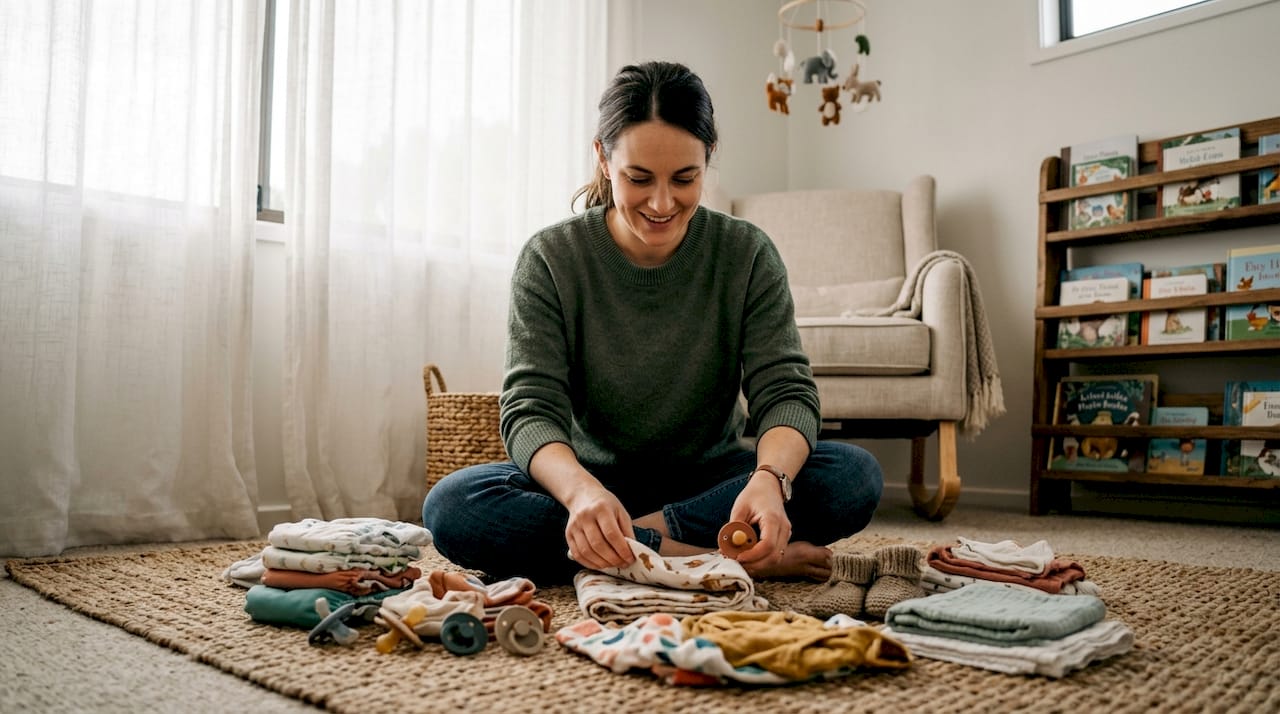
Must-have items for new moms are the core products that protect infant safety, simplify daily care, and reduce the mental load of early parenthood. The American Academy of Pediatrics (AAP) sets the safety baseline for many of these items, from rear-facing car seats to firm sleep surfaces. Getting these right before your baby arrives is not optional. It is the difference between a confident first week and a panicked one.
1. what are the must-have items new moms need first?
The single most important category on any newborn essentials checklist is safe sleep. The AAP recommends placing baby on back for every sleep and using a separate, firm sleep surface in the same room as the parents. Room-sharing without bed-sharing is the standard for at least the first 6 months. This setup reduces the risk of SIDS and suffocation significantly.
Your safe sleep setup should include:
- Crib or bassinet that meets current CPSC safety standards
- Firm, flat mattress with a fitted sheet only
- Wearable blankets or sleep sacks instead of loose blankets
- No pillows, bumpers, or soft toys in the sleep area
Swaddles and wearable blankets reduce the risk of overheating and suffocation compared to loose blankets. Dress your baby in one layer more than you would wear yourself. That rule takes the guesswork out of nighttime dressing.
Pro Tip: Set up a small changing station next to the bassinet before your due date. Stock it with diapers, wipes, and a change of clothes. At 3 a.m., you will not want to walk to another room.

2. which feeding supplies are non-negotiable?
Feeding gear is the second pillar of your newborn essentials checklist. Whether you plan to breastfeed, pump, or formula feed, having the right supplies ready before birth removes a major source of stress. The core items are the same regardless of your feeding method.
Here is what to have on hand:
- Nursing pillow (Boppy and Frida Mom are two widely used options) for positioning support
- Breast pump, either manual or electric, covered by most U.S. insurance plans under the ACA
- Bottles and nipples in at least two nipple flow levels
- Burp cloths, at least 8–10 on hand at any time
- Milk storage bags if you plan to pump and store
- Formula and bottles if you are not breastfeeding or supplementing
Nursing pillows, breast pumps, and bottles each serve a distinct function. A nursing pillow reduces arm and back strain during long feeds. A breast pump gives you flexibility and helps establish supply. Bottles let other caregivers feed the baby, which matters more than most first-time moms expect.
Pro Tip: Start with a slow-flow nipple and only move up if your baby shows signs of frustration. Going too fast too soon causes gas and overfeeding.
3. what diapering items should you have ready?
Diapering is the most frequent task you will do in the first weeks. Newborns use about 70 diapers per week, which means running out is a real risk if you understock. Plan ahead and buy across two sizes since newborn sizing varies by brand and birth weight.
| Item | Disposable | Cloth |
|---|---|---|
| Upfront cost | Low | Higher |
| Ongoing cost | High | Low |
| Convenience | Very high | Moderate |
| Environmental impact | Higher | Lower |
| Best for | Travel, early weeks | Home use, long term |
Your diapering station should include:
- Diapers in newborn and size 1 (stock both before birth)
- Fragrance-free baby wipes or warm water wipes for sensitive skin
- Waterproof changing pad with an antimicrobial cover
- Diaper cream with zinc oxide for rash prevention
- Wet bag or diaper pail with odor control
Antimicrobial changing pad covers reduce bacteria transfer between changes. That detail matters when you are doing 10 or more changes per day. Keep everything within arm’s reach so you never leave the baby unattended on the pad.
4. critical safety and health monitoring items
A digital thermometer is one of the most important items in your new mom survival kit. For infants under 3 months, a rectal temperature of 100.4°F or higher is a medical emergency that requires immediate pediatric evaluation. Do not wait to see if it resolves on its own. Knowing this threshold before you need it can meaningfully improve your response time.
Your health monitoring kit should include:
- Rectal digital thermometer (the most accurate method for newborns)
- Nasal aspirator such as the Frida NoseFrida for congestion relief
- Baby nail clippers or file to prevent scratching
- Infant medicine dropper for weight-based dosing when needed
A nasal aspirator and baby nail clippers are small items that get overlooked on most registries. They are used almost daily in the first months.
Pro Tip: Write your pediatrician’s after-hours number and the nearest children’s ER address on a card and tape it inside your medicine cabinet. When you are sleep-deprived and scared, you will not want to search for it.
5. the rear-facing car seat: non-negotiable before birth
A rear-facing car seat must be installed and ready before you leave the hospital. This is not a suggestion. Most hospitals will not discharge a newborn without confirmed safe transport. Infants should remain rear-facing as long as possible within the seat’s height and weight limits, with convertible seats supporting rear-facing up to age 2 and beyond.
Owning the seat is only half the job. Correct installation is just as critical as the seat itself. Many fire stations and certified Child Passenger Safety Technicians (CPSTs) offer free installation checks. Book one before your due date. Popular infant seat options include the Chicco KeyFit 35, the Graco SnugRide 35, and the Nuna PIPA.
Check that the seat fits your specific vehicle before purchasing. Some seats do not fit well in smaller cars or rear-facing in certain back seat configurations.
6. postpartum recovery items for mom
Your own recovery is part of the newborn essentials checklist. The items for postpartum recovery are often left off baby registries, but they belong on yours. The first two weeks after birth are physically demanding, and having the right supplies at home reduces discomfort and speeds healing.
Core items for postpartum recovery include:
- Peri bottle for perineal care after vaginal birth
- Witch hazel pads (Tucks brand is widely available) for swelling and discomfort
- Postpartum underwear or mesh hospital underwear in bulk
- Nipple cream such as Lansinoh lanolin for breastfeeding soreness
- Stool softener recommended by most OBs for the first week
- Heating pad for uterine cramping and back pain
These items are part of a complete postpartum self-care plan. Skipping them because they feel less exciting than baby gear is a mistake most first-time moms regret by day three.
7. clothing and swaddle basics
Baby clothing is one area where less is genuinely more. Newborns grow fast, and overstocking a single size wastes money. Focus on function over style in the first three months.
What you actually need:
- 6–8 onesies in newborn and 0–3 month sizes
- 4–6 sleepers with zip closures (snaps at 3 a.m. are nobody’s friend)
- 3–4 swaddle blankets in muslin or cotton
- 2–3 hats for warmth in the first days
- 1–2 pairs of scratch mittens
Zip-up sleepers save real time during nighttime changes. That sounds minor until you are doing your fourth change of the night. Muslin swaddle blankets from brands like Aden + Anais double as nursing covers, stroller covers, and burp cloths.
Key takeaways
The most important must-have items for new moms cover safe sleep, feeding, diapering, health monitoring, and postpartum recovery, and getting them ready before birth removes the biggest sources of early stress.
| Point | Details |
|---|---|
| Safe sleep comes first | Use a firm, flat surface and room-share without bed-sharing for at least 6 months. |
| Car seat before discharge | Install and check the rear-facing seat before your due date, not after. |
| Know the fever threshold | A rectal temp of 100.4°F in a newborn under 3 months requires immediate medical care. |
| Stock diapers across two sizes | Newborns use about 70 diapers per week; size varies by brand and birth weight. |
| Include postpartum recovery items | Peri bottles, witch hazel pads, and nipple cream belong on your registry too. |
What i actually tell first-time moms about this list
Most first-time moms I talk to spend hours researching the fun gear: the strollers, the nursery decor, the cute outfits. The items that actually make the first weeks survivable get added as an afterthought. That is backwards.
The bassinet placement matters more than the stroller brand. A well-stocked changing station next to your bed matters more than a designer diaper bag. I have seen moms arrive home with a gorgeous nursery and no rectal thermometer, no peri bottle, and a car seat they installed themselves without a safety check. That is a stressful situation that is completely avoidable.
My honest advice: build your list around the safety and recovery items first. Add the nice-to-haves after. If you are building a registry on a budget, prioritize the AAP-recommended sleep setup, a certified car seat, a digital thermometer, and your postpartum recovery kit. Everything else can wait or be gifted later.
One thing most lists miss: time management for new parents is its own skill. Time management tips for new parents can help you figure out how to structure those chaotic early days so you are not just surviving on adrenaline.
You do not need to buy everything before the baby arrives. You need to buy the right things.
— Rebeka
Get organized before baby arrives
Feeling overwhelmed by everything on your list is normal. Babybareessentials is built specifically for first-time moms who want clear, evidence-based guidance without the noise.

The Baby Bare Essentials the Planner covers everything from newborn care basics to feeding, sleep routines, and postpartum recovery. You will find practical checklists, product guidance, and real answers to the questions that keep you up at night. The Baby Bare Essentials planner takes it further, walking you through pregnancy, the newborn stage, and toddlerhood in one organized place. Start with the blog and build your confidence one step at a time.
FAQ
What are the first items to buy for a new mom?
Start with a rear-facing car seat, a firm sleep surface, a digital rectal thermometer, and postpartum recovery supplies. These cover safety and immediate physical needs before anything else.
How many diapers does a newborn use per week?
Newborns use about 70 diapers per week on average. Stock both newborn and size 1 before birth since sizing varies by brand and your baby’s birth weight.
What safe sleep items does the AAP recommend?
The AAP recommends a firm, flat sleep surface, back-sleeping for every sleep, and room-sharing without bed-sharing for at least the first 6 months. Loose bedding, pillows, and soft objects do not belong in the sleep space.
When is a newborn fever a medical emergency?
A rectal temperature of 100.4°F or higher in an infant under 3 months requires immediate pediatric evaluation. Do not wait or treat at home first.
What postpartum recovery items do new moms need?
A peri bottle, witch hazel pads, postpartum underwear, nipple cream, and a stool softener are the core items. Most OBs recommend having these ready at home before your due date.
Recommended
Explore More Pregnancy & Baby Resources
At Baby Bare Essentials, we believe pregnancy should feel more peaceful, informed, and joyful. Explore our most-loved tools and guides:
The Pregnancy Planner
An all-in-one premium planner designed to guide you through pregnancy, birth, postpartum, and your baby’s first years.
Pregnancy Week by Week
Follow your baby’s development and learn what to expect every week of your pregnancy.
Baby Due Date Calculator
Find your estimated due date and understand your pregnancy timeline.
Ovulation Calculator
Track your fertile window and better understand your cycle when trying to conceive.
Hospital Bag Checklist
Everything you need to pack for labor, delivery, and postpartum recovery.
Mom Quiz
Fun and helpful quizzes designed for expecting and new moms.
Real Mom Reviews
Read experiences and feedback from hundreds of mothers who use Baby Bare Essentials.
Pregnancy & Motherhood Blog
Expert-backed articles on pregnancy, newborns, routines, feeding, postpartum, and more.
About the Author
Meet the creator of Baby Bare Essentials and discover the mission behind our brand.
Leave a Reply