

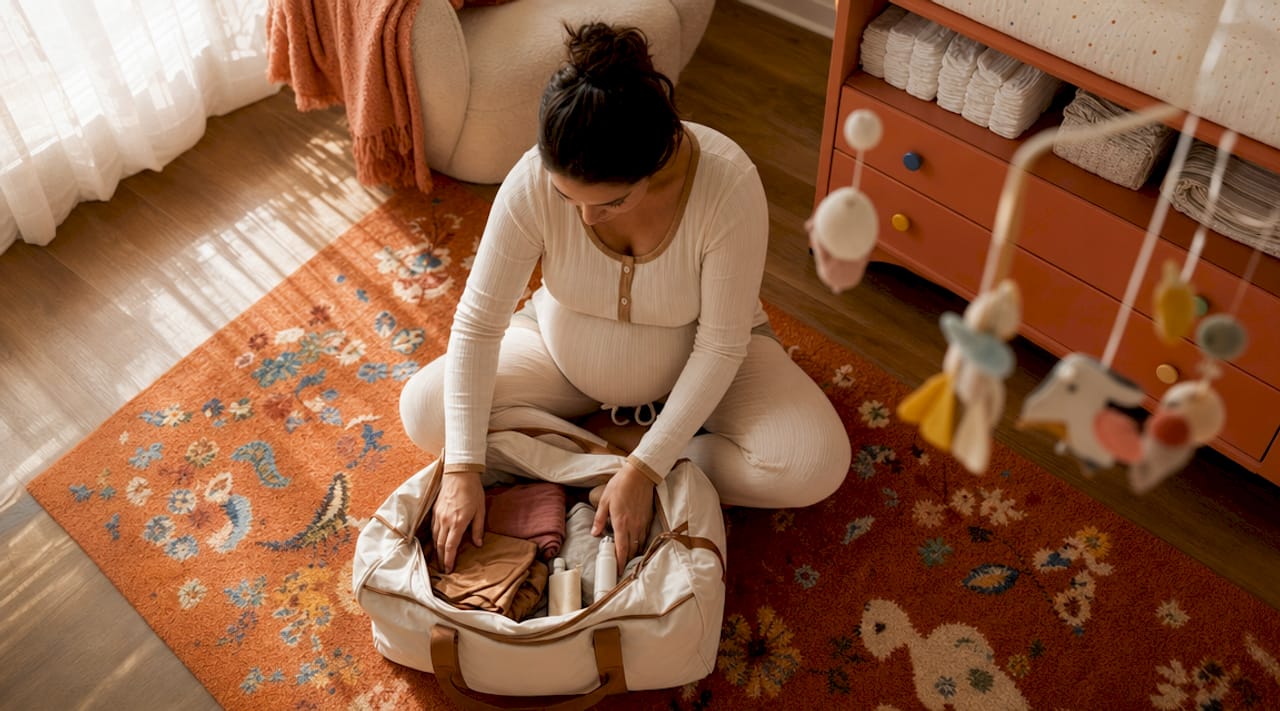
Hospital bag essentials are the carefully selected items every expectant mother needs to pack for labor, delivery, and postpartum recovery. Getting this right matters more than most first-time moms expect. You may go into labor weeks early, or your stay may run longer than planned. Knowing exactly what is hospital bag essentials means you walk into the hospital calm and prepared, not scrambling. This guide pulls from expert guidance by the National Maternity Hospital, NCT, and Ascension labor and delivery nurses to give you a clear, practical hospital bag checklist you can trust.
What are the must-have items to pack for labor and delivery?
A labor bag is the bag you grab the moment contractions start. It holds everything you need from admission through active labor and delivery. Keep it light, keep it organized, and make sure every item in it earns its place.
Clothing and comfort items:
- A front-opening nightdress (makes skin-to-skin contact and breastfeeding much easier)
- A dressing gown for walking the halls
- Nonslip socks and a pair of slippers
- Flip-flops for the shower
- Spare underwear (at least two to three pairs)
Toiletries and personal care:
- Toothbrush and toothpaste
- Deodorant
- Lip balm (this one gets overlooked constantly, but lip balm is critical during long labors when breathing through your mouth dries your lips out fast)
- Shower toiletries, since Ascension nurses specifically recommend bringing your own for post-delivery showers
- Hair ties and a small brush
Administrative documents:
- Maternity notes
- Photo ID
- Health insurance card
- Medication list and emergency contacts
Administrative readiness is as important as physical comfort. Missing your insurance card or maternity notes at admission creates friction at the worst possible moment.
Snacks, hydration, and tech:
- A refillable water bottle
- Easy snacks like granola bars, nuts, or dried fruit
- Phone and charger (your charger will be the item you most regret forgetting)
Small baby bundle for delivery:
- Two to three newborn diapers
- A onesie or vest
- A babygrow or sleeper
- Baby wipes
The National Maternity Hospital recommends packing a small baby bundle in your labor bag specifically because hospital storage is limited. Keeping baby items minimal at this stage means you are not digging through a packed bag mid-contraction.
Optional comfort items:
- A printed birth plan
- A small Bluetooth speaker for music
- Aromatherapy roller (lavender is a popular choice for relaxation)
Pro Tip: Pack your labor bag in a smaller tote or backpack that fits under a hospital bed. Hospitals have very limited storage, and a compact bag means your partner can actually find what you need without unpacking everything.
How should you organize separate bags for different phases?

Packing one giant bag for everything is the most common mistake first-time moms make. NCT advises preparing up to three separate bags: a labor bag, a postnatal stay bag, and a partner bag. Each serves a distinct purpose, and separating them prevents exhausted repacking at 3am.
Here is how to think about each one:
- Labor bag: Admission through delivery. Quick-access items only. This is the bag that goes into the room with you.
- Postnatal stay bag: Everything you need for recovery after birth. This bag can stay in the car or with your partner until you are settled into a postnatal ward.
- Partner bag: Your support person needs their own supplies. A hungry, exhausted partner is not helpful to anyone.
What goes in the postnatal stay bag
Your postnatal bag is about recovery and comfort. The National Maternity Hospital guidance specifically highlights items that aid physical recovery after birth. Pack these:
- Maternity pads (bring more than you think you need)
- Nursing bras (two to three, front-opening)
- Comfortable, loose clothing for two to three days
- Your own towels
- A notebook and pen for tracking feeds and diaper counts
- Phone charger (yes, a second one if you can manage it)
For postpartum self-care beyond the hospital, the postpartum guide at Babybareessentials covers what recovery actually looks like in the days after discharge.
What goes in the partner bag
Your partner needs to be self-sufficient so they can focus on supporting you. Their bag should include:
- Snacks and a water bottle
- A change of clothes
- Basic toiletries (toothbrush, deodorant)
- Phone charger and earbuds
- Cash for the hospital cafeteria or vending machines
- Something to read or watch during slower periods
| Bag | Primary purpose | When to access it |
|---|---|---|
| Labor bag | Admission, active labor, delivery | Immediately on arrival |
| Postnatal stay bag | Recovery, feeding, comfort after birth | After delivery, in postnatal ward |
| Partner bag | Partner self-sufficiency and support | Throughout the entire stay |
Packing systems that mirror care phases prevent the exhaustion-driven confusion that happens when everything is crammed into one bag. This is not about being overly organized. It is about making a hard day easier.

Pro Tip: Use labeled zip pouches inside each bag. Northwestern Medicine recommends small labeled pouches for documents and toiletries so you can hand your partner a pouch and they find what you need in seconds.
What are common mistakes to avoid when packing your hospital bag?
Most packing mistakes fall into two categories: forgetting the practical and overpacking the unnecessary. Here are the ones that matter most.
- Forgetting critical documents. Your photo ID, health insurance card, and maternity notes are non-negotiable. Leaving them behind delays admission and creates stress before labor even begins.
- Skipping comfort items. Lip balm, snacks, and a phone charger sound minor. They are not. Ascension labor and delivery nurses specifically call out hydration and personal care as the most overlooked items by laboring moms.
- Not preparing for discharge. The infant car seat is the single most time-sensitive item connected to your hospital stay. Discharge policies mandate an approved, installed car seat before your baby leaves the hospital. Have it installed before 36 weeks.
- Overpacking bulky items. Hospital rooms have minimal storage. A full-size pillow from home sounds comforting until it takes up the only chair in the room. Bring a small travel pillow if you want one.
- Ignoring postnatal wear. Many moms pack for labor but forget they will spend one to three days recovering afterward. Comfortable, loose clothing and supportive nursing bras matter more post-delivery than anything you wear during it.
- No organization system. Loose items in a large bag become impossible to find under stress. Labeled pouches or small packing cubes solve this completely.
Pro Tip: Do a final bag check at 36 weeks using a printed hospital bag checklist. Go item by item. It takes 15 minutes and removes the anxiety of wondering if you forgot something.
When should you start packing your hospital bag?
The right time to start packing is around 36 weeks, which is 6 to 7 weeks before your expected delivery date. Babylist recommends this timeline specifically to account for early labor, which can happen without warning. Being packed at 36 weeks means you are ready no matter what.
Here is a practical approach to getting it done without feeling overwhelmed:
- Week 32: Start a running list. Add items as you think of them. Do not buy anything yet.
- Week 34: Purchase any items you do not already have. Wash baby clothes and nursing bras.
- Week 35: Pack your labor bag completely. Place it near the door or in your car.
- Week 36: Pack the postnatal bag and partner bag. Do your final checklist review.
- Ongoing: Make sure the infant car seat is installed and inspected before your due date.
For bag type, a medium duffel, a backpack, or a rolling tote all work well. Avoid oversized luggage. You want something your partner can carry in one hand while supporting you with the other.
For help organizing baby gear before and after the hospital, Babybareessentials has a dedicated guide that walks you through practical systems for the early weeks.
The mindset shift that helps most: think of packing as a one-time task you complete early, not something to revisit constantly. Pack it, close it, and let it sit ready. That peace of mind is worth more than any single item inside the bag.
Key takeaways
A well-packed hospital bag built around three separate bags for labor, postnatal recovery, and your partner is the most effective way to stay organized and comfortable from admission through discharge.
| Point | Details |
|---|---|
| Pack three separate bags | Labor, postnatal, and partner bags each serve a distinct phase and prevent exhausted repacking. |
| Documents are non-negotiable | Photo ID, insurance card, and maternity notes must be in your labor bag before 36 weeks. |
| Comfort items get overlooked | Lip balm, snacks, and a phone charger are the items labor nurses see moms wish they had packed. |
| Car seat readiness is critical | An installed, approved infant car seat is required for discharge and should be ready before 36 weeks. |
| Start packing at 36 weeks | Packing early accounts for unexpected early labor and removes last-minute anxiety. |
What I’ve learned from helping moms pack smarter
Here is something most hospital bag articles will not tell you: the bag itself matters less than the system inside it. I have seen moms show up with perfectly curated bags that were completely useless under stress because nothing was labeled or separated. And I have seen moms with a simple backpack and three labeled zip pouches who had everything they needed at their fingertips.
The three-bag approach from NCT is genuinely the best framework I have come across. It is not about having more stuff. It is about having the right stuff accessible at the right time. Your labor bag should be so light and organized that your partner can find anything in it within 30 seconds. Your postnatal bag can be more thorough because you will have time to unpack it.
One thing I feel strongly about: do not skip the partner bag. Your support person being hungry, uncomfortable, or scrambling for their phone charger pulls their attention away from you. A dedicated bag for them is an act of self-care for yourself.
The car seat point is the one I want every expectant mom to hear clearly. It is not a “nice to have” item to sort out eventually. Hospitals will not discharge your baby without one. Get it installed, get it inspected at a local fire station or police department, and check it off your list before 36 weeks. That one item, handled early, removes a surprising amount of late-pregnancy stress.
Pack early, pack with purpose, and trust that you have what you need.
— Rebeka
Get your hospital bag ready with Babybareessentials
Packing for the hospital is one of the most concrete ways to feel ready for birth. Babybareessentials is built to help first-time moms do exactly that, with evidence-based guidance, practical checklists, and tools that cover everything from pregnancy through the newborn weeks.

Visit the Babybareessentials blog for downloadable checklists, postpartum guides, and newborn care resources that go beyond the basics. Whether you are packing your labor bag for the first time or preparing for twins, the posts library has practical, no-fluff guidance written specifically for new moms. You do not have to figure this out alone.
FAQ
What are hospital bag essentials for mom?
Hospital bag essentials for mom include a front-opening nightdress, toiletries, maternity notes, photo ID, insurance card, snacks, a phone charger, and maternity pads for postnatal recovery. Comfort items like lip balm and nonslip socks are frequently overlooked but genuinely important during labor.
How many bags should I bring to the hospital?
NCT recommends bringing up to three bags: a labor bag for admission and delivery, a postnatal stay bag for recovery, and a partner bag for your support person. Separating them by care phase prevents confusion and exhausted repacking during your stay.
When should I pack my hospital bag?
Pack your hospital bag by 36 weeks, which is roughly 6 to 7 weeks before your due date. Babylist recommends this timeline to account for early labor, which can begin without warning at any point in the final weeks of pregnancy.
What newborn items should I bring to the hospital?
Bring a small baby bundle including newborn diapers, a onesie, a babygrow, and baby wipes. Hospitals provide many newborn essentials, but you will need your own baby clothes and an approved, installed infant car seat for discharge.
What documents do I need in my hospital bag?
You need your maternity notes, photo ID, health insurance card, medication list, and emergency contacts. Northwestern Medicine stresses that these documents reduce friction at admission and support safe continuity of care throughout your stay.
Leave a Reply