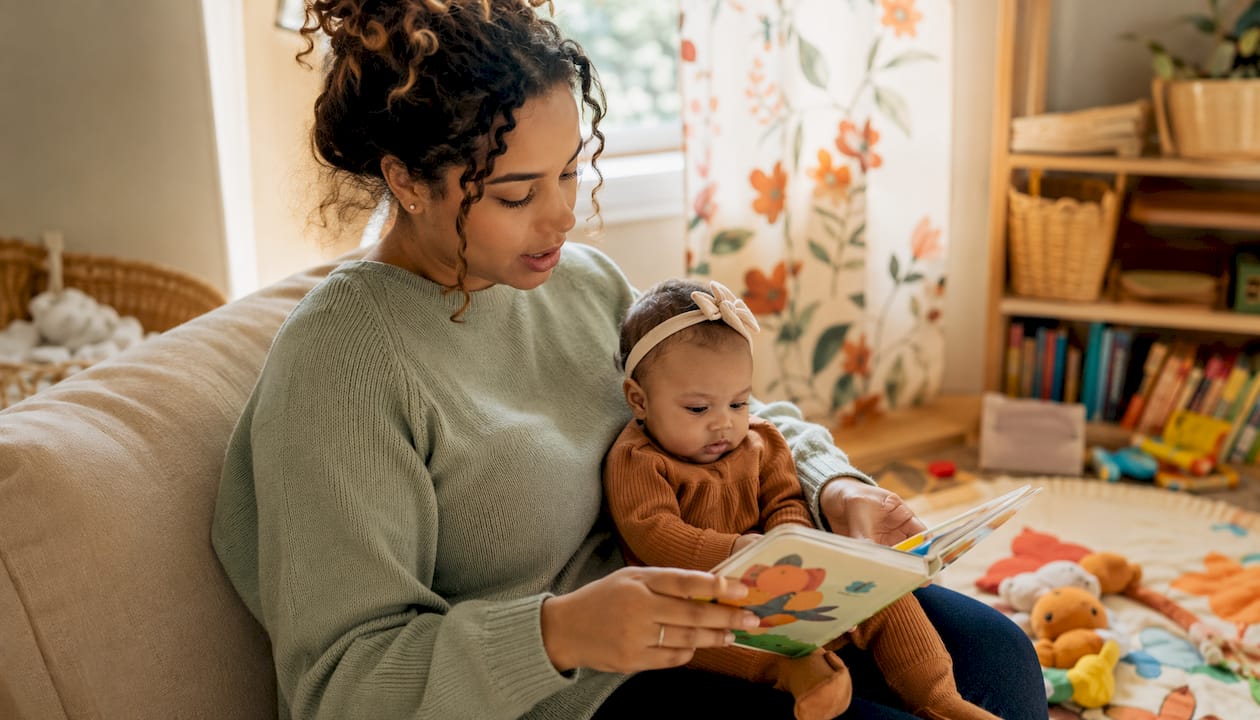
Why reading aloud to babies is one of the best things you can do
Reading aloud to your baby is not just a sweet bedtime ritual. It is one of the most evidence-based practices in early childhood development, with measurable effects on language, brain growth, and emotional bonding. The American Academy of Pediatrics recommends starting from birth, not because newborns follow plot lines, but because every word you speak builds the neural architecture they will rely on for the rest of their lives.
The role of reading aloud to babies covers far more ground than most parents expect:
- Language development: Babies absorb vocabulary, sentence rhythm, and speech sounds long before they can talk.
- Brain growth: MRI studies show positive brain structure-function associations in children with consistent home reading exposure.
- Social-emotional bonding: Shared reading creates a secure, predictable experience that deepens your connection.
- Screen time alternative: Print-based reading builds the caregiver-child interaction that digital media simply cannot replicate.
- School readiness: Early literacy habits lay the foundation for reading comprehension, attention, and learning confidence years later.
You do not need a special voice or a library of books. You just need to start.
Table of Contents
- Developmental benefits of reading aloud that the research actually shows
- How and when to read aloud to your baby
- Choosing books your baby will actually engage with
- Expert insights on reading aloud from Babybareessentials
- Why reading aloud is important beyond just literacy
- Tips to make reading aloud more effective and enjoyable
- Addressing challenges parents face when reading aloud
- Key Takeaways
- FAQ
Developmental benefits of reading aloud that the research actually shows
The benefits of reading to infants are specific and well-documented, not vague feel-good claims.

Language acquisition is the most immediate gain. Babies begin recognizing speech sounds within weeks of birth, and consistent read-aloud exposure accelerates that process. Studies show significant language gains in both receptive and expressive language as early as 9 months when parents read daily. That is before most babies say their first word.

Brain development follows closely. Reading aloud floods a baby’s brain with rich input: new words, varied sentence structures, emotional tone, and visual cues from illustrations. This combination builds neural connections at a rate passive activities cannot match.
Attention and memory also develop through repeated story exposure. Babies who hear the same books regularly begin to anticipate familiar phrases, which strengthens early memory circuits and attention span.
Research highlight: Shared reading builds social-emotional resilience by creating a sense of security for children and increasing parental self-efficacy, meaning it is good for you too, not just your baby.
Additional benefits include:
- Emotional regulation: The calm, predictable rhythm of a read-aloud session helps babies self-soothe and feel safe.
- School readiness: Children read to regularly from birth arrive at kindergarten with stronger vocabulary, listening skills, and print awareness.
- Resilience: Nurturing read-aloud routines reduce parenting stress and reinforce the secure attachment that buffers children against adversity.
How and when to read aloud to your baby
Start on day one. Seriously. Even a newborn benefits from hearing your voice in a structured, loving context. The goal is consistency, not perfection.
Timing matters. Read when your baby is calm and alert, not overtired or hungry. Before a nap, after a feeding, or as part of a bedtime wind-down all work well. A 5–10 minute session is plenty for young infants.

Interactive reading beats passive reading every time. The NAEYC calls this “serve-and-return” reading: you read a line, your baby coos or reaches for the page, you respond to that cue. That back-and-forth exchange builds neural connections more effectively than simply reading straight through. Pause. Make eye contact. Let your baby “answer.”
Practical techniques that work:
- Use an expressive voice. Vary your pitch, slow down for suspense, speed up for excitement. Babies track speech sounds closely, and your tone holds their attention.
- Point to pictures. Even at two months, babies respond to high-contrast images. Pointing and naming builds early word-object associations.
- Follow your baby’s lead. If they lose interest, stop. If they grab the book and chew it, that is fine. Physical exploration of books is developmentally normal and part of how babies learn what books are.
- Repeat favorites. Rereading the same book is not boring to a baby. It is how they learn to anticipate language patterns and build early comprehension.
- Adjust as they grow. A two-month-old needs simple sounds and faces. A nine-month-old can handle short narratives and will start pointing at pictures themselves.
Choosing books your baby will actually engage with
Not all books are created equal for infants, and the right choice changes as your baby grows.
For newborns through six months, prioritize:
- High-contrast board books with bold black-and-white or primary-color images.
- Rhyming and rhythmic texts that exaggerate speech sounds and make language musical.
- Books with repetition, so your baby begins to predict what comes next.
From six months onward, add:
- Touch-and-feel books with varied textures that invite physical interaction.
- Lift-the-flap books that build early cause-and-effect thinking.
- Photo books featuring real faces, including family photos, which babies find deeply engaging.
- Culturally diverse books that reflect a range of faces, families, and experiences. Exposure to diverse stories from early infancy builds early empathy and a sense of belonging.
On digital books: The AAP is clear that print books support caregiver-child interaction more effectively than digital formats. E-books with sound effects and animations tend to shift a baby’s attention away from your voice and face, which is where the real developmental work happens. Keep screens out of the reading routine for now.
A few practical setup tips:
- Keep a small basket of board books in the living room and bedroom so books are always within reach.
- Create a cozy reading spot with good lighting and minimal distractions.
- Treat books as toys. The more accessible they are, the more naturally reading becomes part of your day.
Expert insights on reading aloud from Babybareessentials
The research is consistent: reading aloud works best when it feels like a conversation, not a performance. UNICEF’s early childhood experts describe reading as a natural, playful way to help babies make sense of their world, with the emphasis on attentive interaction rather than academic pressure.
Dr. Alison Gopnik, a leading developmental psychologist, has long argued that babies are far more cognitively capable than we assume. They are not passive recipients of information. They are active learners who use every interaction, including a read-aloud session, to build their understanding of language, relationships, and the world.
Pro Tip: Treat every read-aloud as a two-way conversation. Pause after a line, look at your baby, and wait. Even a babble or a reach toward the page counts as a “turn.” This serve-and-return pattern is what builds language circuits most effectively.
What Babybareessentials recommends for parents building a reading routine:
- Start before you feel ready. You do not need to understand infant development deeply to begin. Your voice alone is the tool.
- Consistency beats duration. Ten minutes every day outperforms an hour on weekends.
- Your tone and responsiveness matter as much as the words. Warm, expressive reading builds the social-emotional circuits alongside the language ones.
- Use your planner. Babybareessentials’ pregnancy and baby planner includes developmental milestone tracking that helps you see how reading aloud connects to your baby’s broader growth at each stage.
Why reading aloud is important beyond just literacy
Reading aloud is not only about preparing your baby to read someday. It is about the relationship you are building right now. Every time you sit down with a book, you are telling your baby: you have my full attention. That message, repeated daily, is the foundation of secure attachment.
Reading aloud also gives language to emotions. Stories name feelings like fear, joy, and sadness in a safe context, which helps babies begin to recognize and eventually regulate their own emotional states. The impact of storytelling on infants extends well into childhood, with children who were read to regularly showing stronger empathy and social understanding by school age.
There is also an equity dimension worth noting. Reading aloud is one of the most accessible developmental activities available to families at any income level. It requires no equipment, no subscription, and no expertise.
Tips to make reading aloud more effective and enjoyable
Reading aloud should feel good for both of you. If it feels like a chore, something needs to shift.
- Pick books you enjoy too. Your enthusiasm is contagious. A book you love will come alive in your voice.
- Read at the same time each day. Predictable routines help babies anticipate and settle into the experience faster.
- Do not worry about finishing the book. If your baby is done, you are done. The goal is engagement, not completion.
- Sing when you can. Nursery rhymes and songs count as reading aloud and are especially powerful for phonological awareness.
- Involve other caregivers. Grandparents, partners, and older siblings reading aloud all contribute to a baby’s language-rich environment.
Addressing challenges parents face when reading aloud
The most common concern: “My baby won’t sit still.” That is completely normal. Babies are not designed to sit quietly. They grab, chew, and look away. None of that means the reading is failing.
If your baby chews the book: Use board books designed for exactly this. It is exploration, not destruction.
If your baby loses interest quickly: Shorten the session. Two minutes of engaged reading beats ten minutes of a distracted baby. As attention spans grow, so will your reading time.
If you feel self-conscious reading aloud: You are not performing for an audience. Your baby does not care about your voice quality. They care that it is your voice.
If life gets busy: Even reading a cereal box aloud counts. The habit of narrating your world to your baby, whether from a book or a grocery list, builds the same language exposure.
Key Takeaways
Reading aloud from birth is one of the most effective, accessible ways to support your baby’s language, brain, and emotional development.
| Point | Details |
|---|---|
| Start from birth | The AAP recommends reading aloud from day one; even newborns benefit from hearing your voice. |
| Daily consistency wins | Language gains appear early when parents read every day, even briefly. |
| Interaction is the key | Serve-and-return reading, responding to your baby’s cues, builds neural connections more effectively than passive reading. |
| Print books over screens | Print-based reading supports caregiver-child interaction in ways digital formats do not replicate. |
| Any book, any time | Accessible, low-cost, and flexible, reading aloud fits every family and every stage of infancy. |
FAQ
Is reading aloud to babies actually good for them?
Yes. Reading aloud from birth supports language, cognitive, and social-emotional development, with MRI studies showing positive brain structure changes in children with consistent home reading exposure.
When should I start reading to my baby?
Start from birth. The American Academy of Pediatrics recommends reading aloud from day one, as even newborns benefit from hearing a caregiver’s voice in a structured, loving context.
Why is reading to babies so important for development?
Reading aloud builds vocabulary, attention, emotional regulation, and secure attachment simultaneously. Children read to regularly from infancy arrive at school with stronger language skills and greater readiness to learn.
Are babies actually learning when I read to them?
Absolutely. Babies are active learners who absorb speech sounds, word patterns, and emotional tone from every read-aloud session, often showing measurable language gains before their first birthday.
You are already doing something meaningful every time you pick up a book with your baby. If you want a simple way to track your baby’s milestones and build literacy-rich routines into your daily schedule, explore the tools and planner at Babybareessentials.

Leave a Reply