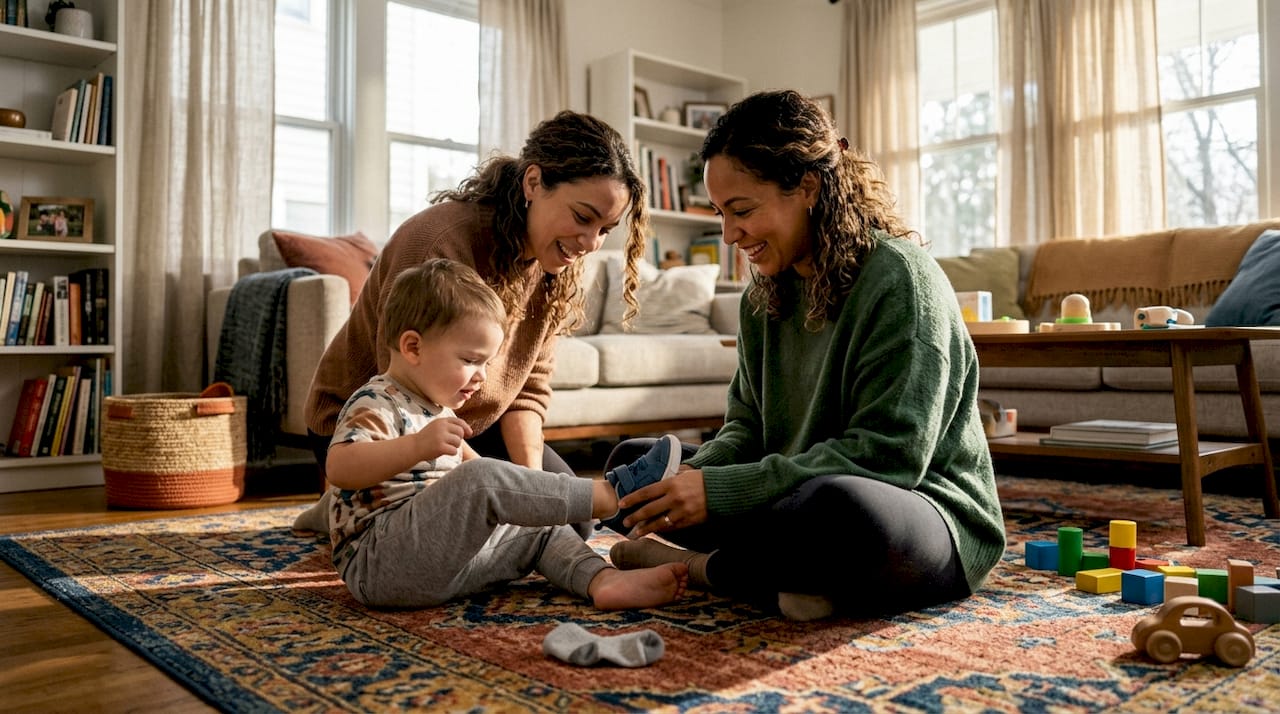
Consistent daily routines are defined as the predictable, repeated sequences of activities that give toddlers a reliable framework for their day. The role of consistency in toddler routines goes far beyond keeping schedules tidy. Research in developmental psychology confirms that predictable rhythms directly support brain development, emotional regulation, and positive behavior in children ages 1–3. When toddlers know what comes next, they feel safe. That sense of safety is the foundation for everything from language growth to self-discipline.
How consistent routines shape toddler brain development
The toddler brain is in one of its fastest growth phases. Neural pathways form through repeated experiences, and predictable routines give the brain exactly what it needs: pattern, repetition, and low-stress practice. Each time your toddler moves through the same sequence, whether it is breakfast, play, nap, or bath, those pathways strengthen.
The Montessori framework describes this as a sensitive period for order. During this window, toddlers are wired to seek predictability. Disrupting that predictability does not just frustrate them. It triggers genuine anxiety. Consistent routines reduce that anxiety and give toddlers the calm they need to focus, explore, and learn.
Emotional regulation is one of the clearest benefits. When toddlers can anticipate transitions, they do not need to fight them. A child who knows that bath always follows dinner does not melt down at the sight of the tub. The routine itself becomes the signal, and the signal becomes the comfort.
- Brain development: Repeated patterns reinforce neural connections that support memory and learning.
- Emotional regulation: Predictable sequences reduce cortisol spikes and help toddlers manage transitions.
- Anxiety reduction: Knowing what comes next lowers stress, which frees up mental energy for play and discovery.
- Self-discipline: Routines teach toddlers to move through tasks without constant prompting.
Pro Tip: Start with just two anchored routines, morning and bedtime, before adding more. Two strong, consistent bookends give the whole day a sense of structure without overwhelming you or your toddler.
What routines matter most for toddler sleep and behavior?
Not all routines carry equal weight. Bedtime and mealtime routines show the strongest links to measurable outcomes in toddler health and behavior.

Research on Mexican American toddlers using actigraphy found that bedtime routine consistency significantly predicts earlier sleep-onset times and reported bedtimes. That finding matters because earlier, more consistent sleep onset connects directly to better mood, attention, and behavior the following day.
Here is the part that surprises most parents: the specific activities in the routine matter less than the consistency itself. Reading, singing, or a warm bath are all fine choices, but specific bedtime activities show no significant association with sleep onset once routine consistency is accounted for. The sequence and reliability are what drive the benefit, not the particular steps.

| Routine type | Key benefit | What the research shows |
|---|---|---|
| Consistent bedtime | Earlier sleep onset | Stronger predictor than specific activities |
| Regular mealtimes | Reduced behavior problems | Linked to lower ADHD symptoms in low-income families |
| Morning routine | Calmer transitions | Reduces resistance and irritability at school start |
| Predictable playtime | Cognitive focus | Structured activities reinforce vocabulary and attention |
A Penn State longitudinal study found that strong family routines like regular bedtimes and shared meals link to lower behavior problems and reduced ADHD symptoms. That connection held most strongly in families where parenting was warm rather than harsh. Routine is powerful. The way you deliver it shapes how much of that power your child actually receives.
Does consistency mean rigidity? Balancing structure and flexibility
Consistency does not mean every day must be identical. It means your toddler can predict the general shape of the day and trust that you will follow through. That distinction matters enormously for parents who feel like they are failing every time the schedule slips.
The Montessori perspective frames toddlers not as children testing limits but as children seeking reassurance. When you stay calm and consistent, even on imperfect days, you are telling your toddler: “The world is safe and predictable.” That message builds trust faster than any single perfect routine ever could.
Parenting style is the critical variable here. Penn State research shows that harsh parenting practices undermine routine benefits by increasing behavior problems and ADHD symptoms. A rigid schedule delivered with frustration and aggression produces worse outcomes than a flexible routine delivered with warmth. The delivery method is not secondary. It is central.
For co-parenting families, maintaining shared stability routines across two households reduces confusion and helps toddlers feel secure even when circumstances change.
- Keep the sequence, not the clock. If dinner runs late, the bath-book-bed sequence still signals sleep.
- Use transition warnings. Saying “five more minutes, then we clean up” gives toddlers time to shift gears mentally.
- Stay calm when routines break. Your reaction to disruption teaches your toddler how to handle change.
- Avoid screens as a transition tool. Screens create dependency and undermine the self-regulation routines are meant to build.
Pro Tip: When your toddler resists a routine step, lower your voice rather than raising it. A quieter, slower delivery signals safety and reduces the power struggle faster than firmness alone.
Practical steps for building consistent daily routines
Building a routine that actually sticks requires planning, not willpower. The CDC recommends preparing the night before as one of the most effective strategies for routine adherence. Laying out clothes, packing bags, and prepping breakfast ingredients removes the morning chaos that derails even well-intentioned schedules.
- Choose 3–4 anchor points. Wake-up, meals, nap, and bedtime are your non-negotiables. Build everything else around them.
- Use predictable language. The CDC highlights that consistent follow-through and predictable language during transitions reduce toddler resistance and irritability. Phrases like “after lunch, we rest” become cues your toddler learns to trust.
- Keep it simple. A routine with 12 steps will collapse under pressure. A routine with 4 steps survives a bad day.
- Make it visual. A simple picture chart showing the sequence of the day gives toddlers a way to track what comes next without relying on you to narrate every step.
- Stay consistent for at least two weeks. New routines feel awkward before they feel natural. Give your toddler time to internalize the pattern before deciding it is not working.
- Avoid screen-based transitions. Handing a toddler a tablet to move from one activity to the next teaches them to need external stimulation rather than self-regulate.
The goal is a routine your family can sustain on a tired Tuesday, not just a calm Sunday morning.
How routines support social, cognitive, and physical growth
Consistent schedules do more than improve sleep and reduce tantrums. They create the conditions for broader development across social, cognitive, and physical domains.
Speech therapy research shows that structured daily activities transform transition periods into opportunities for vocabulary reinforcement and focus development. When a toddler hears the same words in the same context every day, “time to wash hands before lunch,” that language becomes anchored to meaning. Repetition is how toddlers learn to talk, and routines provide the repetition.
Structured schedules also support toddler autonomy and emotional control. A child who knows the routine can begin to move through it independently. That independence builds confidence, which feeds directly into social cooperation and cognitive focus.
- Social skills: Predictable group routines teach turn-taking, sharing, and cooperation.
- Language development: Repeated language during routine steps builds vocabulary and comprehension. Structured activities also connect to early language milestones in meaningful ways.
- Cognitive focus: Knowing what comes next frees mental energy for learning rather than anxiety management.
- Physical health: Regular sleep and meal schedules regulate appetite, energy, and immune function.
The benefits of structured toddler schedules compound over time. A toddler who sleeps well, eats at regular times, and moves through predictable transitions arrives at preschool with better self-regulation than peers without that foundation.
Key Takeaways
Consistent toddler routines build brain development, emotional regulation, and positive behavior most effectively when delivered with warmth, predictability, and simple structure.
| Point | Details |
|---|---|
| Consistency beats specific activities | Routine regularity predicts better sleep outcomes more than any particular bedtime step. |
| Parenting style shapes results | Warm, calm delivery maximizes routine benefits; harsh parenting reverses them. |
| Anchor points anchor the day | Focus on 3–4 fixed daily moments and build flexibility around them. |
| Routines build more than schedules | Consistent daily rhythms support language, social skills, and cognitive focus alongside sleep. |
| Preparation prevents breakdown | Organizing the night before removes the morning stress that derails routines most often. |
What I have learned from watching routines actually work
Routines are one of those things that sound obvious until you are in the thick of a toddler meltdown at 7:30 PM and nothing is going to plan. I have seen parents build beautifully detailed schedules that collapse within a week because the bar was set too high. And I have seen parents with the simplest, most imperfect routines raise toddlers who sleep well, transition calmly, and cooperate with surprising ease.
The difference is almost never the schedule itself. It is the consistency of the parent’s response. When you follow through calmly, even on the hard days, your toddler learns that the world is reliable. That lesson does more for their emotional development than any perfectly timed nap ever will.
The research backs this up, but so does every parent I have spoken with who has been through it. The toddlers who struggle most are rarely the ones with imperfect routines. They are the ones whose days feel unpredictable and whose caregivers respond differently every time. Predictability is not about control. It is about trust.
If you are just starting out, pick two things and do them the same way every day for two weeks. That is it. You will be surprised how much shifts.
— Rebeka
Routines made easier with Babybareessentials
Building consistent routines is one of the most effective things you can do for your toddler. Knowing where to start is the hard part.

Babybareessentials was built for exactly this moment. The Babybareessentials planner gives parents a clear, practical framework for tracking routines, milestones, and daily schedules from newborn through toddlerhood. You get evidence-based guidance without the noise. Whether you are setting up your first bedtime routine or adjusting a schedule that stopped working, Babybareessentials has the tools to help you feel confident and organized. Visit Babybareessentials.blog to find resources built around real family life.
FAQ
What is the role of consistency in toddler routines?
Consistent routines give toddlers a predictable framework that supports brain development, emotional regulation, and positive behavior. Predictability reduces anxiety and builds the trust toddlers need to feel secure.
Does it matter which activities are in the bedtime routine?
Research shows that routine consistency predicts better sleep outcomes more strongly than any specific activity. Reading, singing, or bathing all work as long as the sequence stays reliable.
How does harsh parenting affect routine benefits?
Penn State research found that harsh parenting practices undermine the positive effects of consistent routines, increasing behavior problems and ADHD symptoms even in structured households.
How long does it take for a new routine to work?
Most toddlers need at least two weeks of consistent repetition before a new routine feels natural. Expect resistance in the first few days as your toddler adjusts to the new pattern.
What is the easiest way to start a toddler routine?
Pick two anchor points, morning and bedtime, and keep them consistent for two weeks before adding more structure. Preparing the night before removes the friction that breaks routines most often.
Leave a Reply