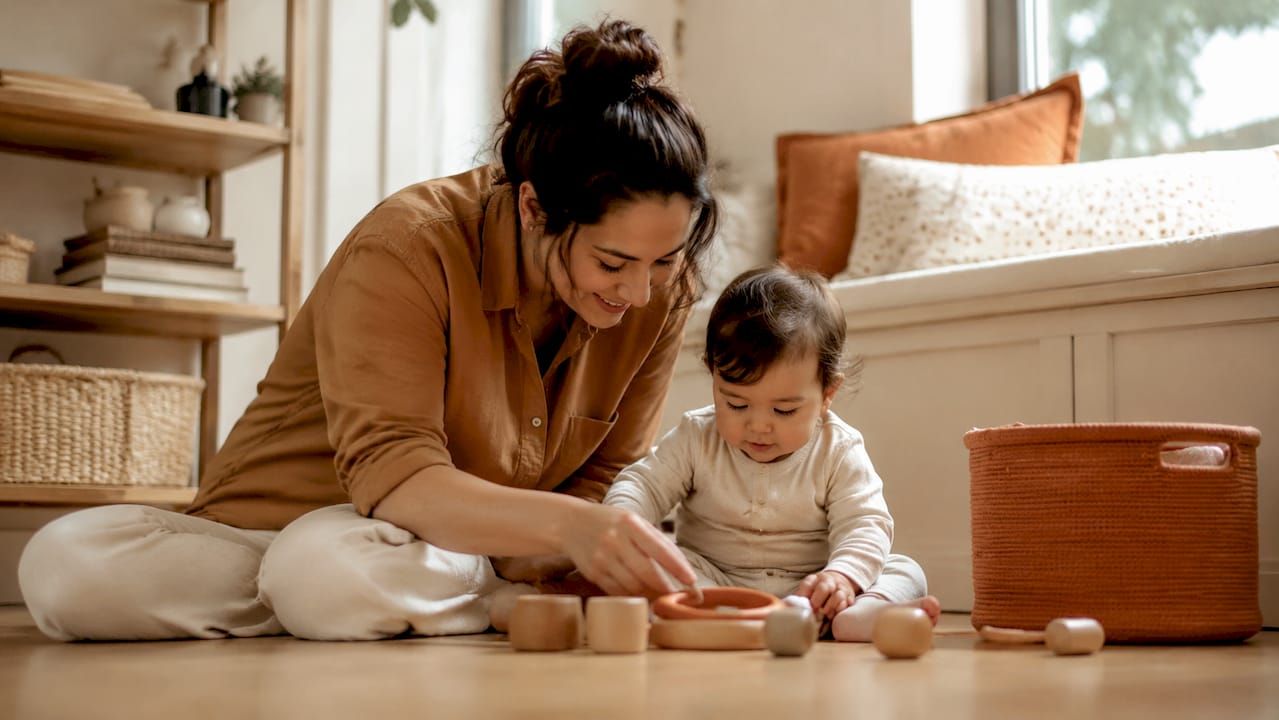
Sensory play is defined as any activity that engages a child’s senses — touch, sight, sound, smell, and taste — to stimulate brain development and build foundational learning skills. The role of sensory play in development goes far beyond keeping a toddler busy. Research from institutions including the Cleveland Clinic and NYU Steinhardt confirms that multi-sensory engagement builds the neural pathways that underpin every major developmental milestone, from language to emotional regulation. If you have ever watched your baby squeeze playdough or splash in a water bin and wondered whether it actually matters, the answer is yes. Deeply, measurably, and across every area of growth.
How does sensory play shape brain development?
The first five years of life are the most critical window for brain growth. During this period, synapse formation and myelination happen at a pace that never repeats. Myelination is the process of insulating nerve fibers so signals travel faster and more reliably. Sensory play accelerates both processes by giving the brain rich, varied input to respond to.
When your child touches wet sand, hears it crunch, and sees it change shape, multiple sensory areas of the brain fire at the same time. Synapses across sensory areas that fire together strengthen together. This is the physical architecture of learning being built in real time.

A 2024 study comparing multi-sensory materials with traditional abstract instruction found that multi-sensory materials outperform traditional toys for children aged 3–8 in both engagement and learning outcomes. That finding matters because it tells you that a bin of dried rice does more developmental work than a flashcard drill.
Screen time does not replicate this. Passive screen viewing activates primarily visual and auditory pathways. Sensory play activates touch, proprioception, and smell simultaneously, creating far richer neural connections.
| Play type | Senses engaged | Neural benefit |
|---|---|---|
| Sensory play (water, sand, dough) | Touch, sight, sound, smell | Multi-pathway synapse formation |
| Traditional toy play | Sight, some touch | Moderate neural engagement |
| Passive screen time | Sight, sound | Limited to two pathways |
Pro Tip: Skip expensive sensory kits. Research confirms that simple household items like dried pasta, water, and fabric scraps engage the brain just as effectively as commercial products.
How sensory play builds motor skills and language
Sensory play is one of the most direct routes to physical development in infants and toddlers. Fine motor skills develop through actions like scooping, squeezing, pinching, and pouring. These movements strengthen the small muscles in the hands and fingers that children will later use for writing, buttoning, and self-care.
Gross motor skills grow through movement-based sensory activities. Crawling through a textured tunnel, balancing on a foam pad, or stomping through a puddle all train coordination and body awareness. These are not just fun moments. They are practice runs for the physical confidence your child needs at every first-year development stage.

The language connection is equally strong. Engaging multiple senses simultaneously creates stronger memory links and aids vocabulary retention more than single-sense input. When you say “rough” while your toddler runs their hand across tree bark, that word attaches to a physical memory. It sticks.
Here is what to focus on for motor and language growth through sensory play:
- Scooping and pouring: Use cups and spoons in a water or rice bin to build hand strength and coordination.
- Squeezing and pinching: Playdough, sponges, and soft clay develop the grip needed for pencil control later.
- Texture walks: Walk barefoot on grass, gravel, and carpet to build body awareness and gross motor confidence.
- Narrate everything: Say what you see and feel out loud. “This is cold.” “This feels bumpy.” That real-time language tied to sensory input is how vocabulary grows fastest.
- Vary the tools: Changing containers or spoons in the same sensory bin alters the cognitive and motor challenge without needing new materials.
What does sensory play do for emotions and social skills?
Sensory play is one of the most underrated tools for emotional regulation in toddlers. Tactile materials like water, kinetic sand, and soft fabrics lower cortisol and help children focus their attention. Lower cortisol means a calmer nervous system. A calmer nervous system means fewer meltdowns and faster recovery when emotions spike.
Calming sensory inputs act as a neurological reset. When a child is overwhelmed, water or soft textures can interrupt the stress response and bring them back to a regulated state. This is not a trick. It is a physiological response you can use intentionally at home.
Here is a simple approach to using sensory play for emotional support:
- Identify your child’s calming input. Some children settle with water play. Others respond to squeezing dough or running fingers through sand. Watch what naturally slows their breathing.
- Keep a calming bin ready. A small container with a preferred texture gives your child a go-to tool during moments of overwhelm.
- Use it proactively, not just reactively. Offer sensory play before transitions like nap time or leaving the house to reduce anticipatory stress.
- Play alongside them. Shared sensory play builds communication, turn-taking, and cooperative problem solving. These are the building blocks of social awareness.
Pro Tip: Observe your child during free sensory play and note which textures they return to most. That preference tells you their natural calming input. Use it when you see stress building, before the tantrum starts.
Social development follows naturally from shared sensory experiences. When two toddlers dig in the same sandbox, they negotiate space, share tools, and react to each other’s discoveries. These interactions build the social vocabulary that structured group settings later depend on.
Practical sensory play ideas for toddlers at home
You do not need a dedicated playroom or a subscription box. The most effective sensory play happens with what you already have. Child-led exploration using open-ended materials produces greater autonomy and cognitive flexibility than adult-directed activities. Your job is to set up the environment and step back.
Start with these everyday setups:
- Water bin: Fill a shallow container with water and add cups, spoons, and small toys. Add ice cubes for a temperature variation.
- Rice or oat bin: Dry grains in a container with scoops and funnels build fine motor skills and focus.
- Playdough: Homemade dough with flour, salt, and water costs almost nothing. Add food coloring or a drop of vanilla extract for extra sensory layers.
- Nature walks: Collecting leaves, rocks, and sticks gives children tactile variety and connects sensory exploration to the natural world.
- Mud kitchen: A patch of dirt and a few old pots creates one of the richest sensory environments available.
Frequency matters more than duration. Short, regular sensory sessions throughout the week build stronger habits than one long weekly activity. Aim for daily exposure, even if it is just ten minutes of water play at the sink. Consistency is what supports holistic development across cognitive, physical, social, and emotional domains.
Resist the urge to direct the play. If your toddler wants to pour the rice on the floor instead of into the cup, that is a valid experiment. They are testing gravity, texture, and cause and effect. Let them lead. The learning is in the exploration, not the outcome.
For children with diverse sensory needs, inclusive STEAM activities offer structured frameworks that adapt sensory play to different sensitivities and learning styles.
Key takeaways
Sensory play builds the brain’s physical architecture during the first five years, making it the most efficient developmental tool available to parents of infants and toddlers.
| Point | Details |
|---|---|
| Brain development window | The first five years are peak time for synapse formation; sensory play accelerates this process. |
| Motor skill growth | Scooping, squeezing, and movement-based play directly build fine and gross motor abilities. |
| Language acquisition | Naming sensory experiences in real time creates stronger vocabulary memory than abstract instruction. |
| Emotional regulation | Tactile materials lower cortisol and act as a neurological reset during moments of overwhelm. |
| Child-led play wins | Allowing children to direct sensory exploration builds autonomy and cognitive flexibility. |
Why I think we underestimate what messy play actually does
When I watch a toddler elbow-deep in a bin of oatmeal, the last word that comes to mind is “learning.” But that is exactly what is happening. The mess is the method.
What I have noticed, both through research and through observing real families, is that parents often feel pressure to make sensory play educational. They want to add counting, colors, and instructions. The instinct is kind, but it works against the child. The moment an adult turns free exploration into a lesson, the child shifts from intrinsically motivated discovery to performance. That shift costs them something real.
The most powerful sensory play sessions I have seen are the quiet ones. A child alone with a bowl of water and a few cups, completely absorbed, not performing for anyone. That absorption is what builds cognitive flexibility and emotional resilience. It is also, not coincidentally, what gives parents a few minutes of calm.
My honest advice: set up the bin, say a few descriptive words, and then get out of the way. Trust the process. The research backs it, and so does every parent who has watched their previously dysregulated toddler settle down after five minutes with a water table.
Sensory play is not entertainment. It is infrastructure. Treat it that way.
— Rebeka
Support your child’s development with Babybareessentials
Knowing the value of sensory play is one thing. Feeling confident about how to use it week after week is another. Babybareessentials is built for exactly that gap.

The Baby Bare Essentials the planner gives you a clear, week-by-week structure for supporting your child’s growth from newborn through toddlerhood. It covers sensory milestones, play ideas, and developmental checkpoints so you always know what to focus on next. No guessing, no 3am searching. Just practical guidance that keeps you one step ahead. For parents who want to go deeper on early literacy, preschool writing activities offer a natural next step once sensory foundations are in place.
FAQ
What is sensory play in child development?
Sensory play is any activity that engages one or more of a child’s senses to stimulate brain development and build neural pathways. It supports cognitive, motor, language, social, and emotional growth, particularly during the first five years of life.
How often should toddlers do sensory play?
Daily sensory exposure, even in short sessions of 10–15 minutes, produces stronger developmental benefits than infrequent longer sessions. Consistency across the week matters more than the length of any single activity.
Does sensory play help with toddler tantrums?
Yes. Tactile materials like water, sand, and soft dough lower cortisol and provide a neurological reset during emotional overwhelm. Offering a preferred sensory activity before or during a meltdown can shorten recovery time significantly.
What are the best sensory play materials for infants?
Simple materials work best. Water, soft fabrics, textured balls, and food-safe items like cooked pasta or oatmeal are safe and effective for infants. Variety in texture and temperature provides the richest sensory input.
How does sensory play support language development?
Children who learn new words while simultaneously experiencing a related sensory input form stronger memory connections than those who learn through verbal instruction alone. Narrating what your child touches, smells, and hears during play is one of the most effective early language strategies available.
Recommended
- The Role of Boundaries in Toddler Development
- Free week by week – pregnancy planner – week 1 to week 40
- Free Pregnancy Due Date Calculator
- Free Ovulation Calculator
- Free Hospital bag check list
- Free Mom Quiz – What kind of mom are you?
- Buy Pregnancy Planner
- The Role of Language Development in Babies
- First Year Baby Development Stages: A Parent’s Guide
- How Baby Vision Develops: A Month-by-Month Guide
Leave a Reply